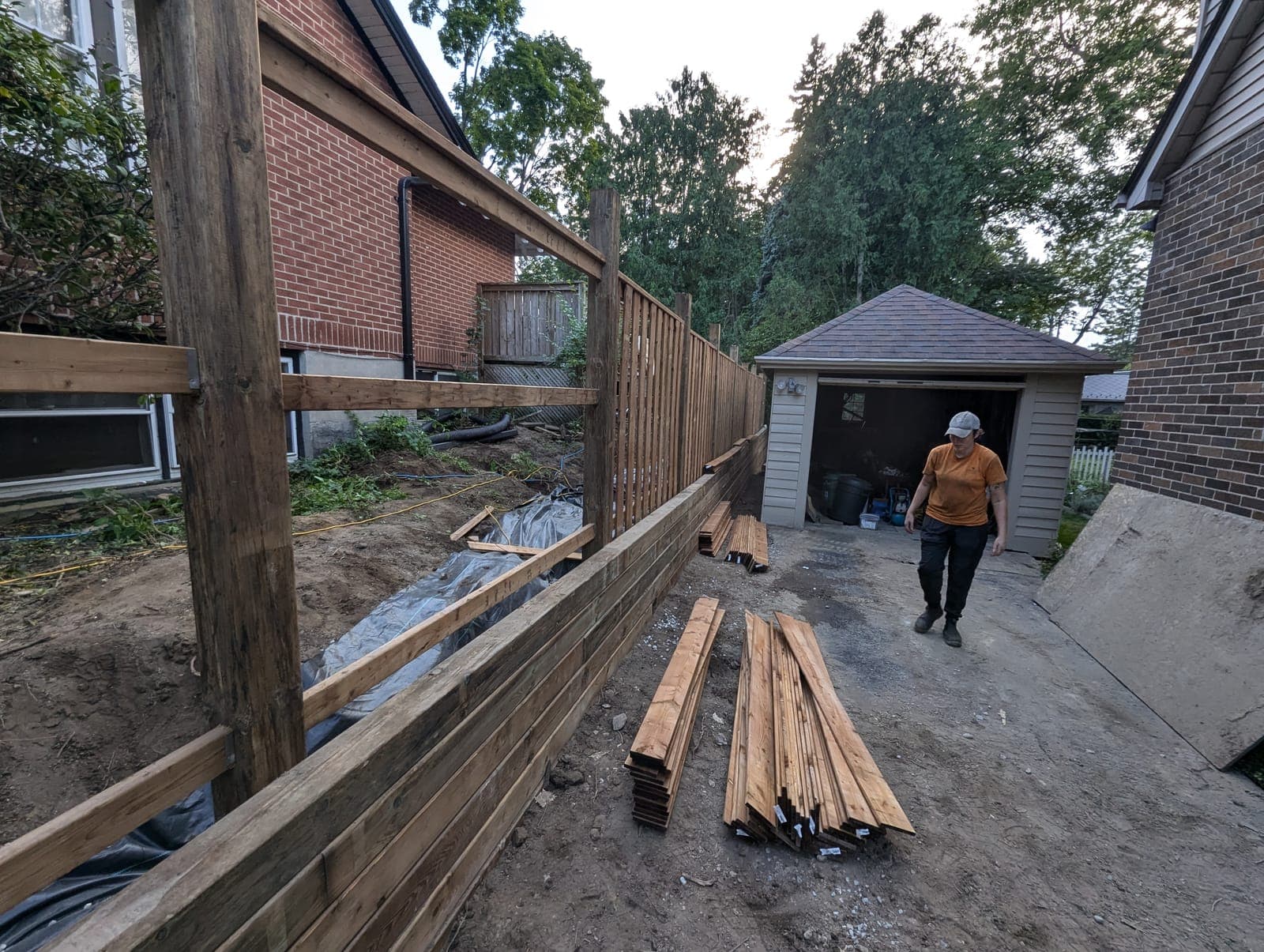
The Kettle Creek Factor
Kettle Creek runs through the heart of St. Thomas, and its valley walls are steeper and more erosion-prone than most of what we see elsewhere in Elgin County. Properties backing onto or near the ravine, including sections of Lynhurst and the older streets around downtown, often have a slope that has been slowly losing soil for years before anyone calls a contractor.
Away from the ravine, St. Thomas has the same clay-heavy till as the rest of the region, so even a flat-looking lot near Yarmouth Heights or the Elgin Mall area can develop standing water against a foundation without a properly drained wall.
Erosion Control vs. Everyday Grade Walls
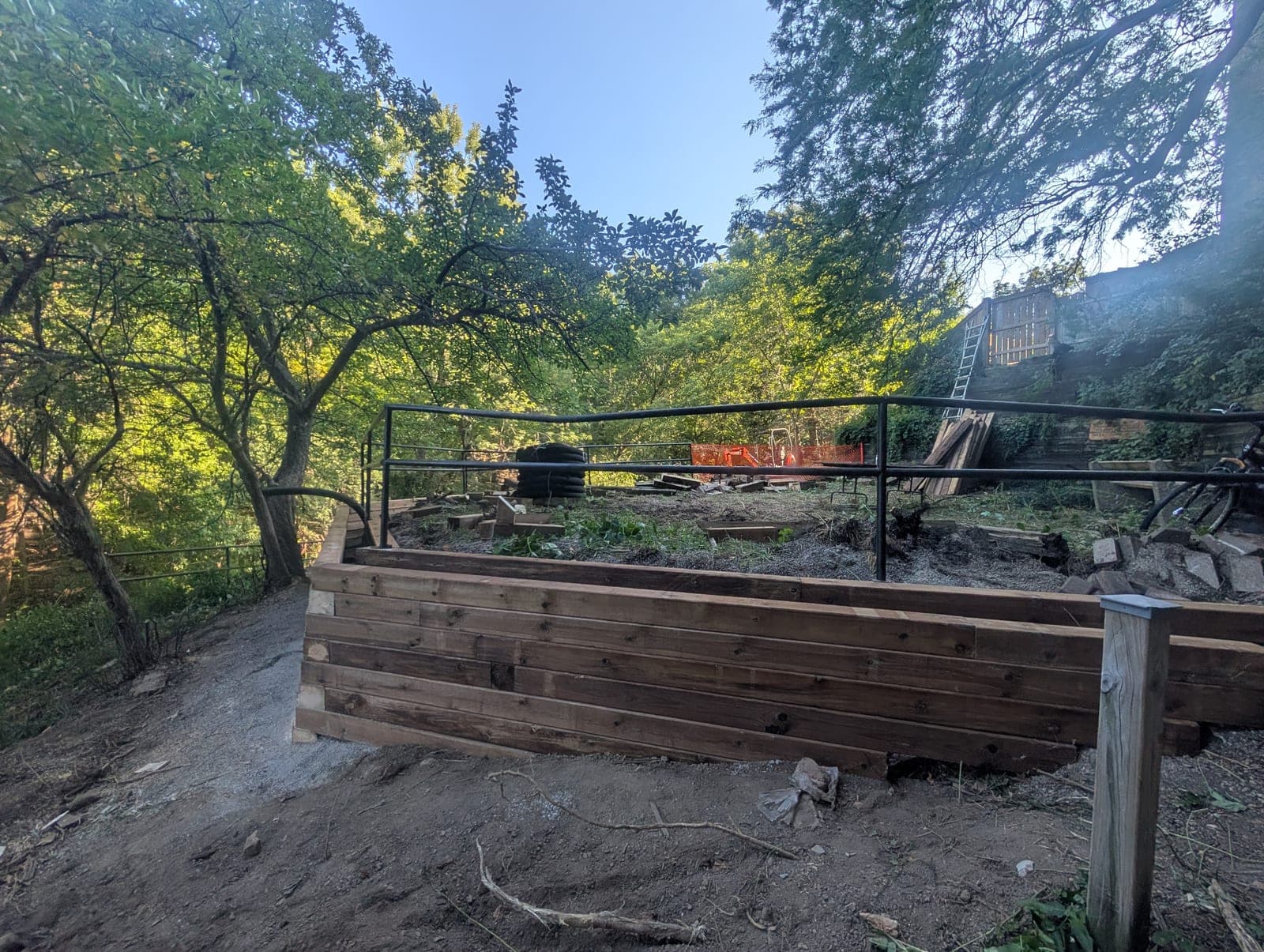
Ravine and creek-adjacent slopes usually need armour stone or heavier segmental block with geogrid tied well back into stable soil, because the goal is holding a bank that has already started to move, not just tidying a grade change.
Everyday backyard and driveway walls on the rest of a St. Thomas lot are a different job entirely, and interlocking block or timber is usually the more economical, straightforward choice there.
- Armour stone or geogrid block for creek and ravine bank stabilization
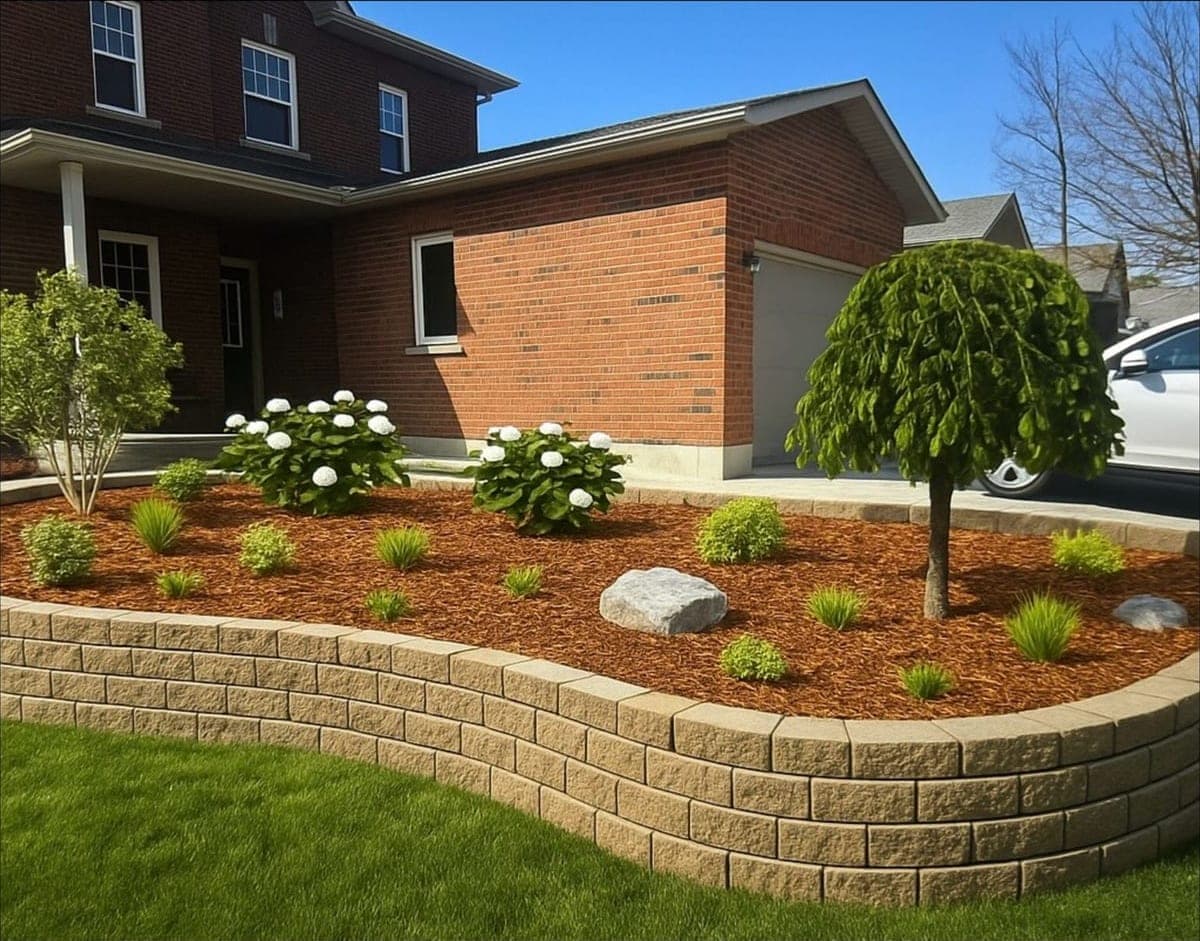
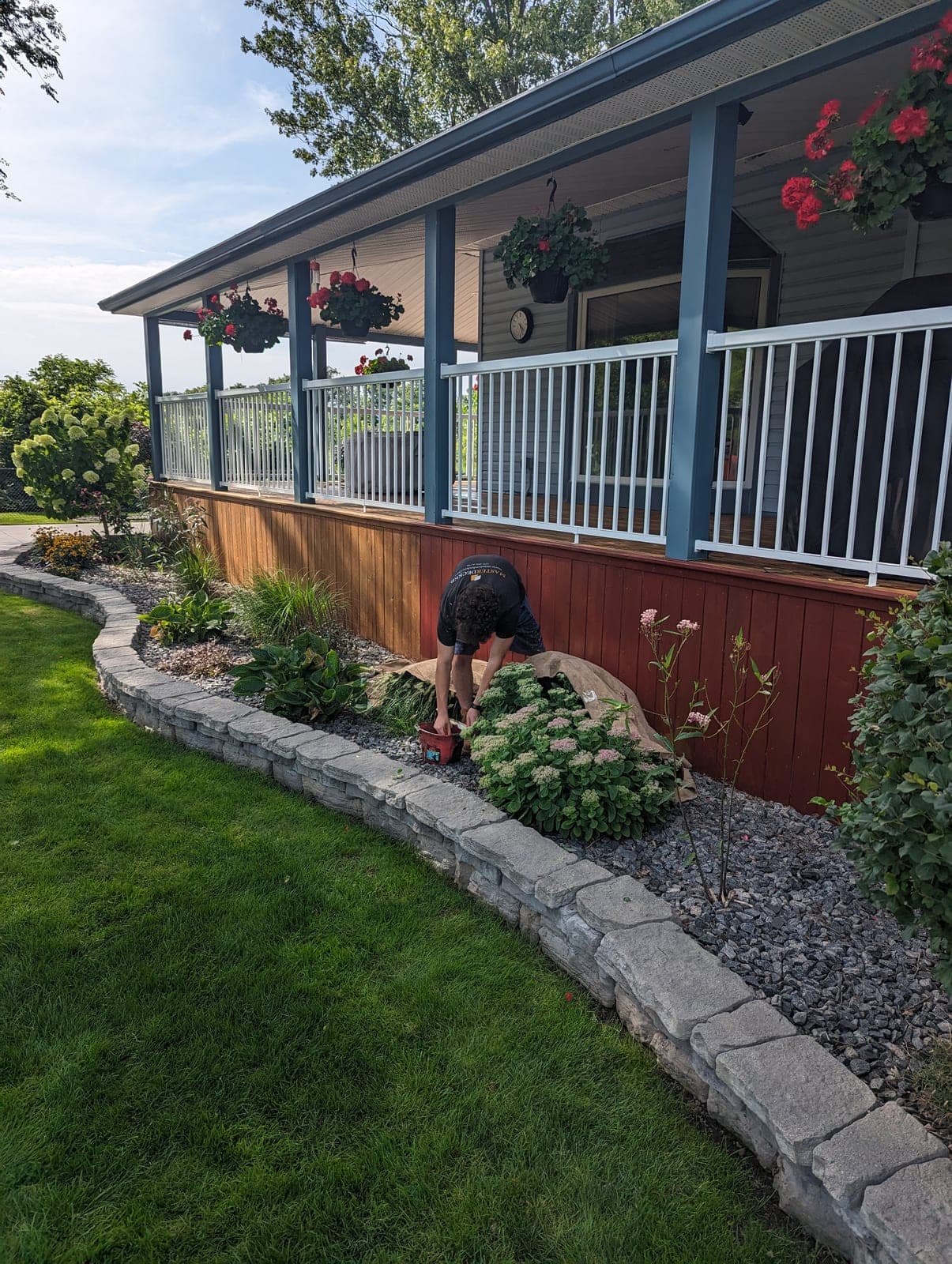
- Segmental block for standard backyard, garden and driveway walls
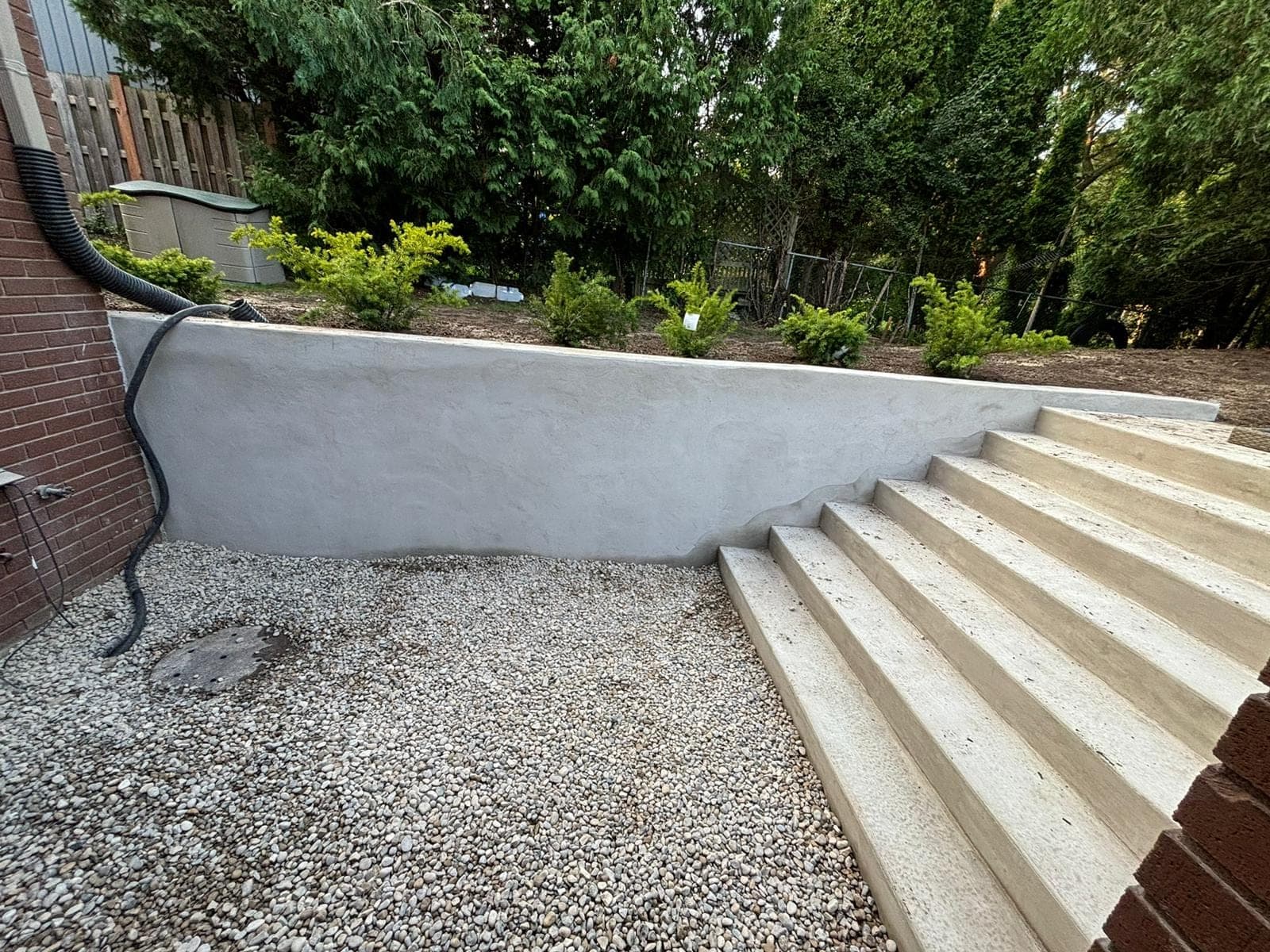
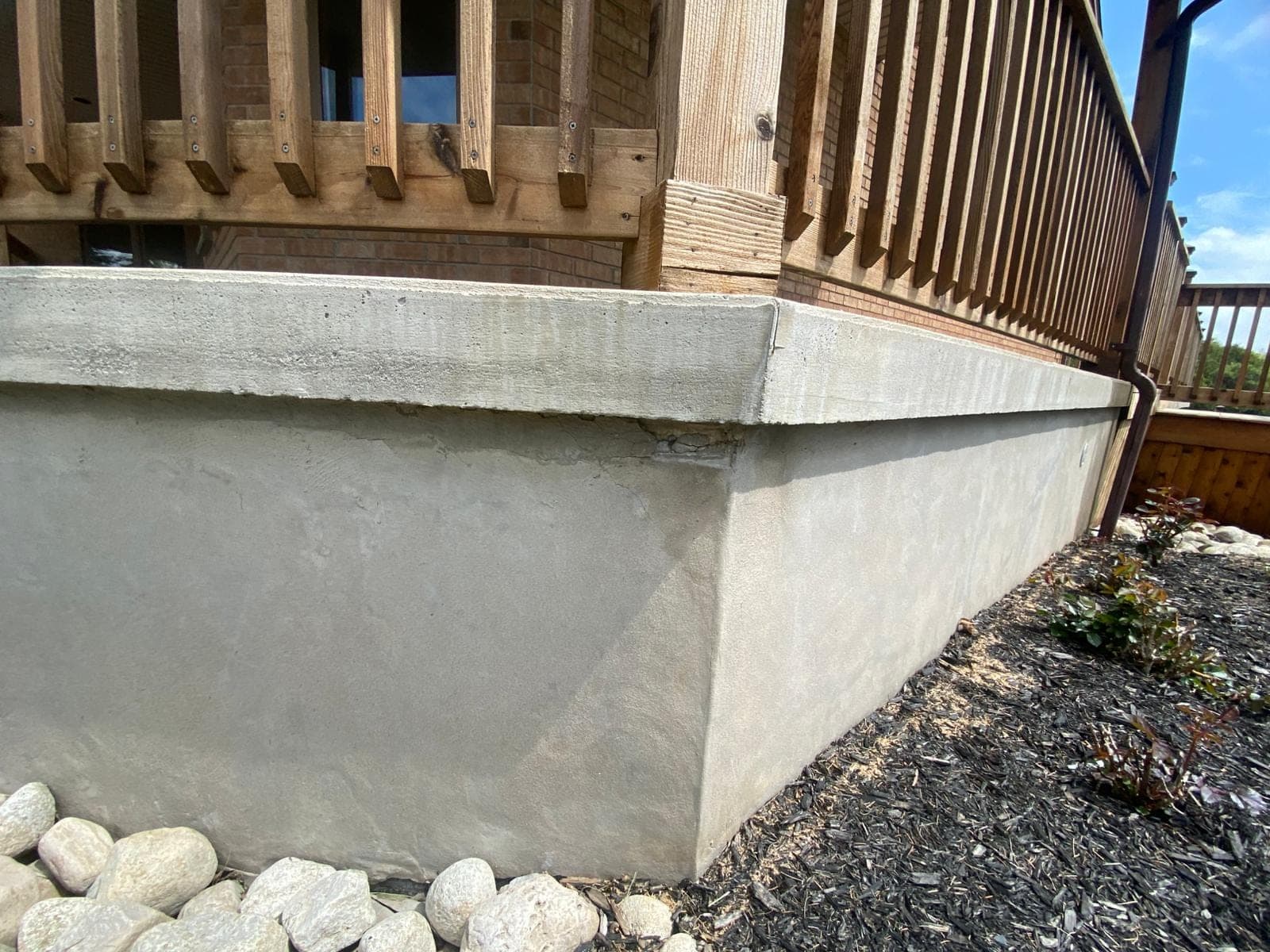
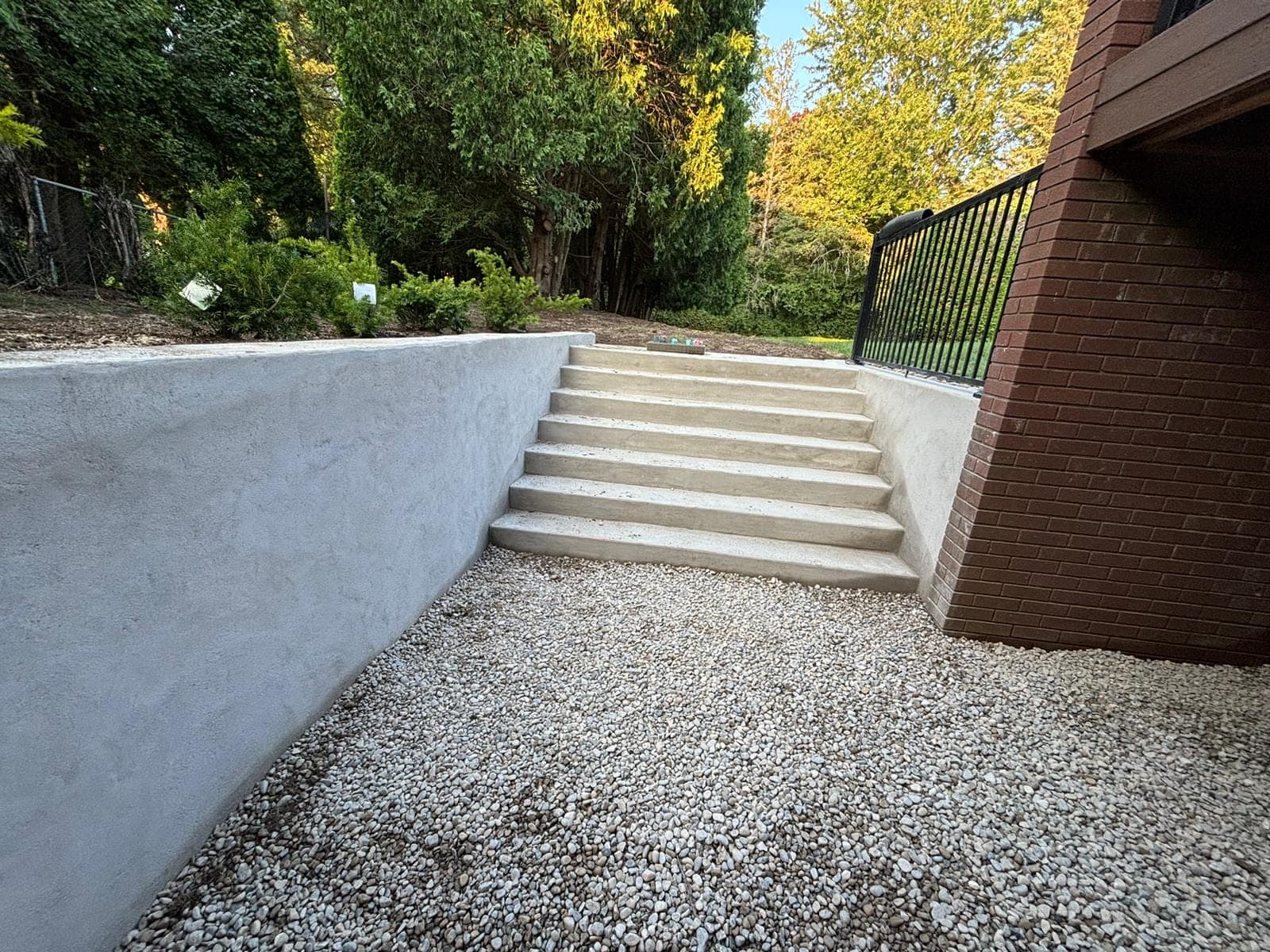
- Poured concrete for tall walkout or engineered sections
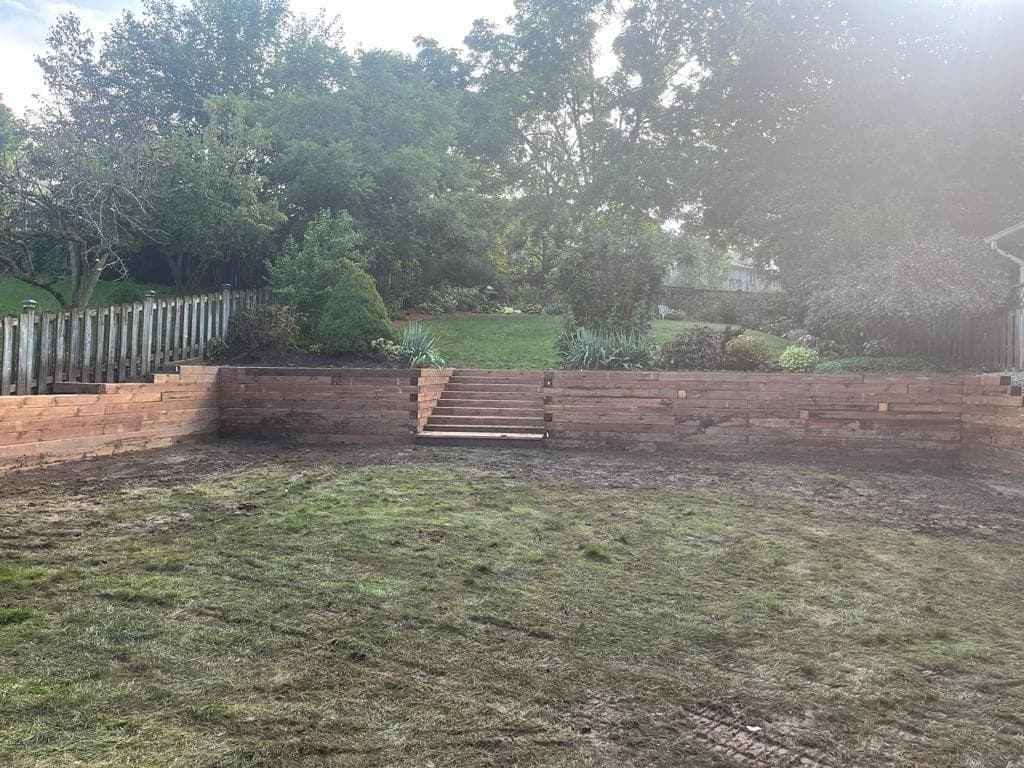
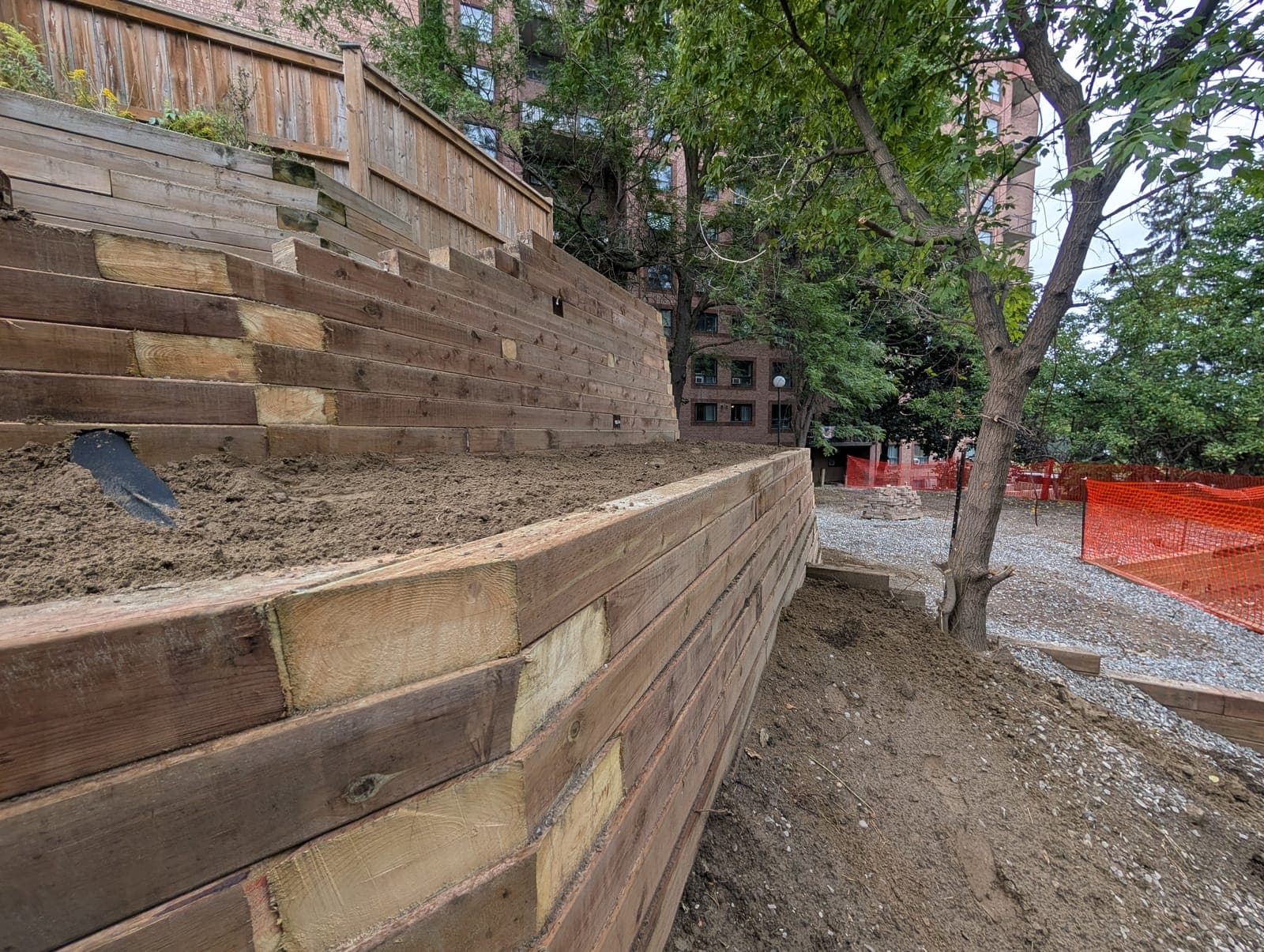
- Timber for lower-budget projects on stable, non-eroding ground
Building a Wall Near a Watercourse
Site and creek assessment
We check how close the wall is to the watercourse and whether the Kettle Creek Conservation Authority has jurisdiction over the work.
Design for the slope
Ravine walls get a different footing depth and drainage plan than a flat-yard wall.
Excavation in stages
Steep sites are excavated in controlled sections to avoid destabilizing the slope above the wall.
Drainage first
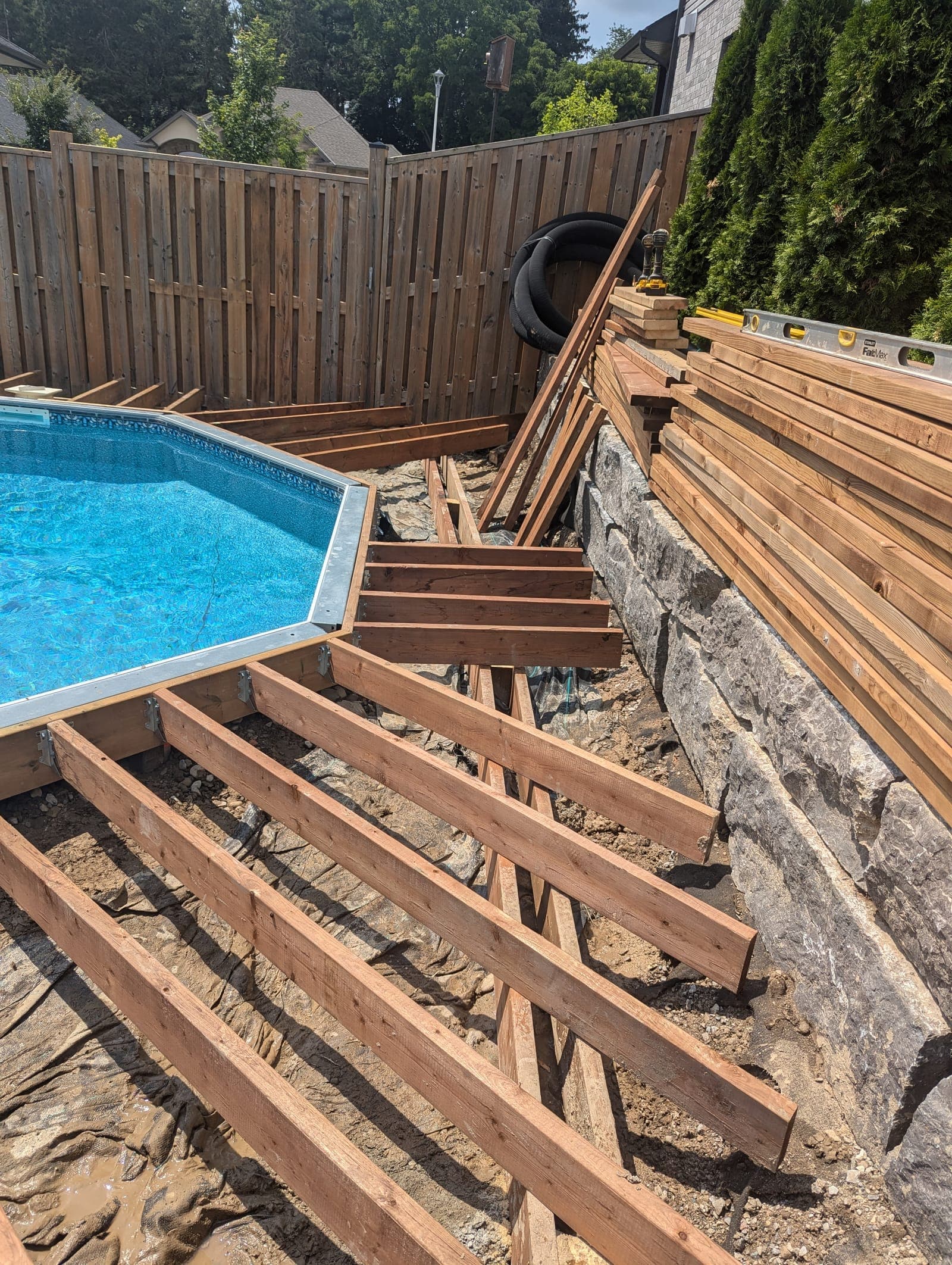
Weeping tile and drainage stone are installed before facing material goes in, which matters even more on a wet ravine bank.
Wall and geogrid installation
Geogrid layers tie taller walls back into undisturbed soil for real holding strength.
Erosion protection and grading
We finish with grading and, where needed, ground cover to keep the bank above the wall from washing down onto it.
Permits with the City of St. Thomas
The City of St. Thomas requires a permit for retaining walls over about 1 metre, and any wall near Kettle Creek or its tributaries may also fall under Kettle Creek Conservation Authority regulations, separate from the municipal permit. We check both before we quote, and we handle the applications so nothing stalls your project partway through.
Cost in St. Thomas
Standard block walls in St. Thomas run about $200 to $350 per linear foot installed, in line with the rest of our service area. Ravine and creek-bank work can push toward the upper end of that range or into custom concrete pricing, because geogrid, deeper footings and erosion control add labour and material. Timber remains the lowest-cost option for stable, non-slope backyards. Every assessment and repair quote is free.
Older St. Thomas Housing Stock
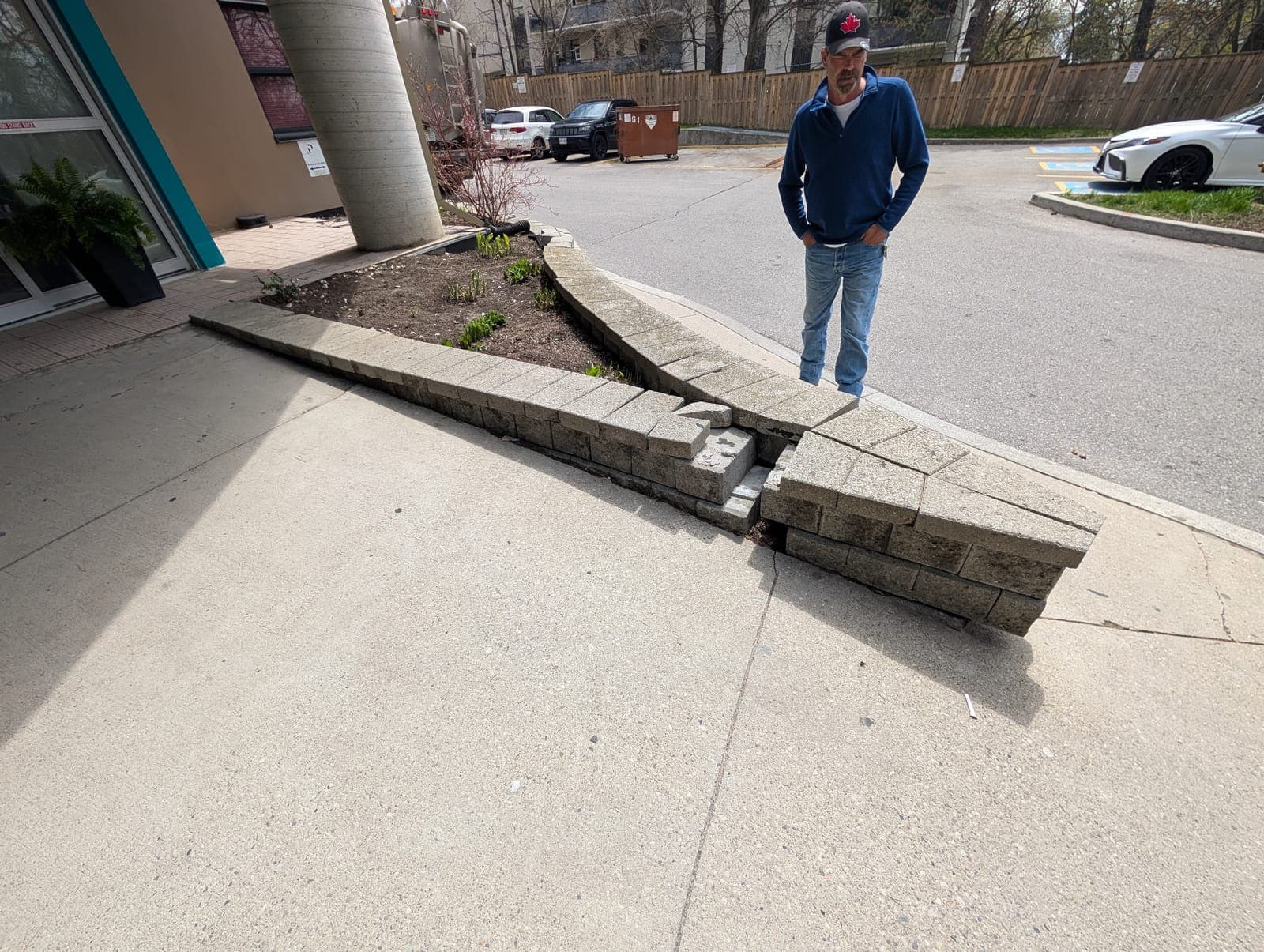
St. Thomas has a lot of housing built well before modern grading standards existed, particularly in the streets closer to downtown and Talbot Street. These older properties sometimes have retaining features, a low stone edge, a timber crib wall, an aging block section, that were never engineered and were never meant to last this long. When we assess one of these, we look at whether the wall is still structurally doing its job or whether age and years of frost cycles have quietly compromised it.
This is different work from a fresh installation, and it usually starts with a conversation about what is realistic: patch, partial rebuild, or full replacement. We give that assessment honestly rather than defaulting to the most expensive option, and if a wall genuinely just needs re-pointing or a section reset, that is what we recommend, in writing, with the reasoning explained.
Why St. Thomas Homeowners Call Us
Not every contractor is comfortable working on a ravine bank, and getting it wrong there can mean losing more of the slope, not less. We have built and repaired enough Kettle Creek valley walls to know how to stage the excavation and where the water actually wants to go.
For a wall on a flatter St. Thomas lot, our block retaining walls and wood & timber retaining walls pages cover the two most common choices we install here.
Questions from St. Thomas homeowners
Do you build retaining walls near Kettle Creek?
Yes, this is some of the more technical work we do in our service area. Ravine-adjacent walls need geogrid reinforcement, careful staged excavation and sometimes conservation authority approval, and we handle all of that.
Does my St. Thomas property need conservation authority approval?
If your wall is near Kettle Creek or one of its tributaries, it may need sign-off from the Kettle Creek Conservation Authority in addition to a City of St. Thomas building permit. We check this during the site visit before quoting.
How much does a retaining wall cost in St. Thomas?
Standard block walls run about $200 to $350 per linear foot installed, similar to London. Ravine and slope stabilization work tends to run toward the higher end because of geogrid and deeper footings. Assessments are always free.
Is my sloped St. Thomas backyard actually eroding or just steep?
We can usually tell during a free site visit. Active erosion shows exposed roots, bare soil channels and undercut banks, while a stable slope just needs grading. Either way we will tell you honestly what the site needs.
How long does a St. Thomas wall project take?
A standard backyard block wall typically takes a few days from excavation to backfill. Ravine stabilization projects with geogrid and staged excavation can run longer depending on slope height and access.
Do you work in the neighbourhoods around downtown St. Thomas?
Yes, including Lynhurst, the streets around Talbot Street and the older lots near Alma College, along with the newer areas toward the Elgin Mall.
Services in St. Thomas