Commercial and Heavy-Load Applications
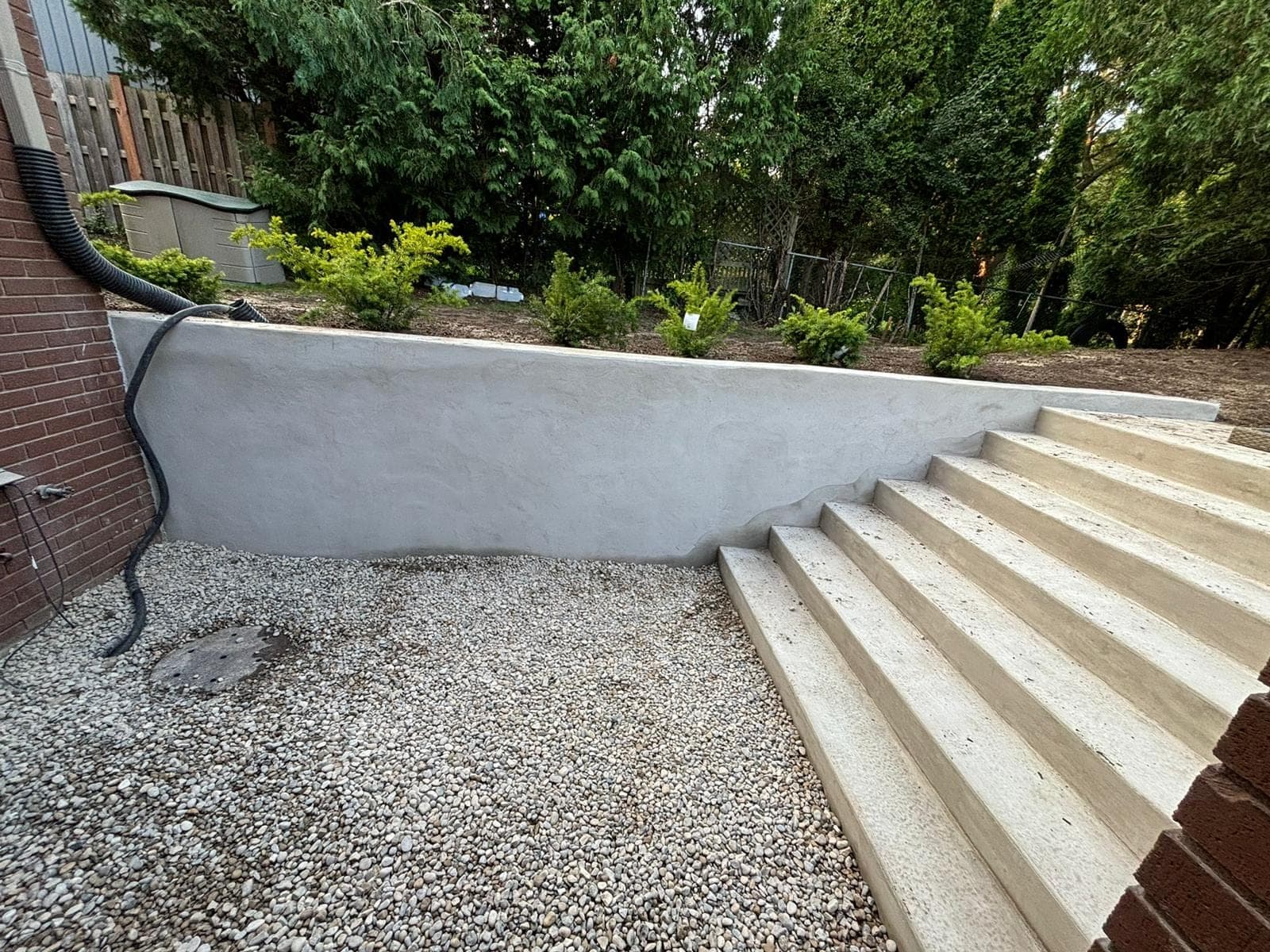
St. Thomas has a mix of commercial and light industrial properties where a retaining wall supports pavement carrying vehicle traffic. That surcharge load changes the engineering requirements significantly, and poured concrete is almost always the material of choice.
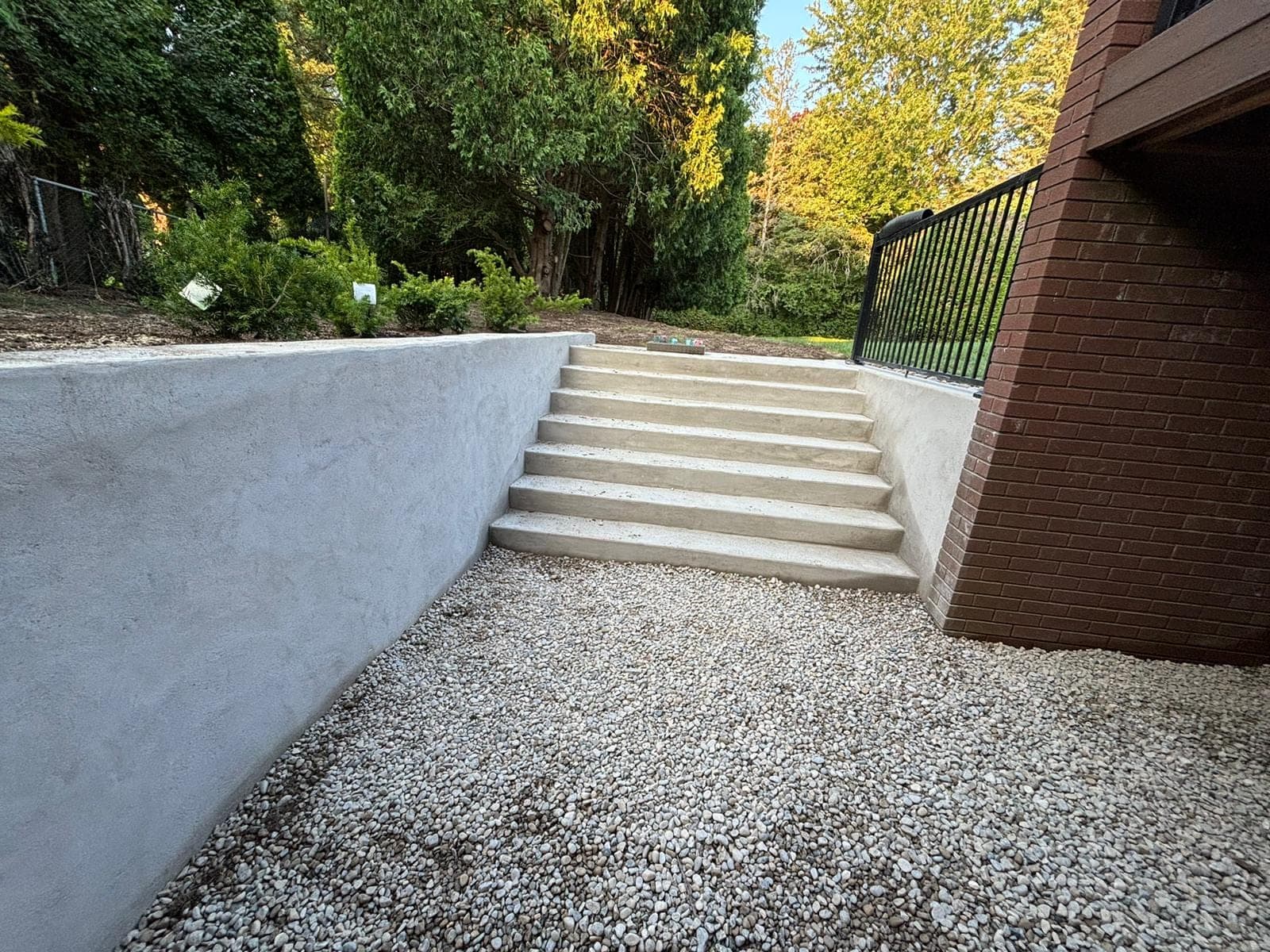
On the residential side, concrete comes up most often for taller walls on larger Elgin County lots where a block wall would exceed practical height limits.
Poured Concrete or Precast Panels
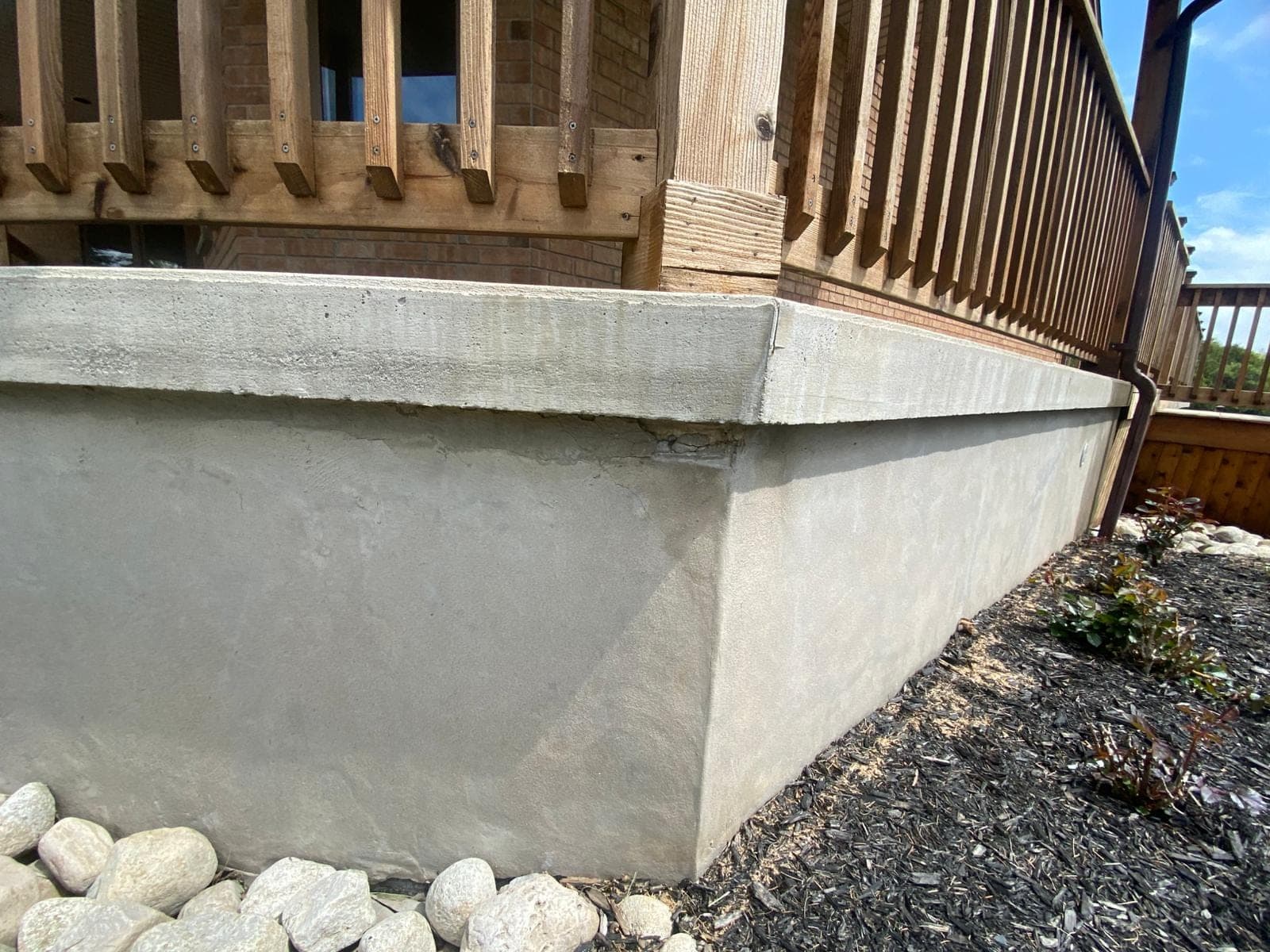
Poured concrete is formed and cast on site, giving maximum strength and the ability to follow custom shapes or curves. Precast panels are manufactured off-site and installed in sections, which speeds up installation and works well for long, straight commercial runs.
Construction Approach
Engineering
Taller and load-bearing walls are designed by an engineer before construction begins.
Excavation and footing
Excavated to design depth with a formed, compacted footing.
Forming and pour
Forms set, reinforcing steel placed, concrete poured and cured before forms are stripped.
Drainage and backfill
Weeping tile and drainage stone behind the wall, backfill compacted in lifts.
Permits With the City of St. Thomas
The City of St. Thomas requires a permit over roughly one metre, and commercial or tall walls generally need engineered drawings. We manage the full submission.
Concrete for Long-Term Commercial Investment
Commercial property owners in St. Thomas often value concrete's low maintenance requirement as much as its strength, since a wall supporting a parking area needs to perform reliably with minimal ongoing attention over its service life.
For property owners comparing lifetime cost across materials, retaining wall cost guide ontario breaks down installed pricing and expected lifespan.
Engineering Review Timelines
For commercial or tall walls in St. Thomas, engineering review and stamped drawings can add one to two weeks to the project timeline before construction starts. We build that into the overall schedule from the outset.
Questions we get asked
Do you build concrete retaining walls for commercial properties in St. Thomas?
Yes, including walls supporting parking areas and loading zones where surcharge loads require engineered design.
What's the price difference between concrete and block in St. Thomas?
Concrete costs more upfront but has the lowest lifetime cost for tall or heavily loaded walls. Block is generally more economical for walls under about 4 to 5 feet.
How long does a concrete wall take to build?
Longer than block, due to forming, curing time and often engineering review. Larger commercial walls can take several weeks from design to completion.
Can concrete retaining walls be finished to look nicer than raw concrete?
Yes, concrete can be parged, textured or faced with stone veneer for a more finished appearance.
Is concrete a better long-term investment for a commercial property?
Generally yes, given its 50 to 100 year service life and minimal maintenance, which matters for a property owner budgeting decades ahead.
Does engineering review slow the project down?
It adds time upfront, typically one to two weeks, but it's necessary for taller or load-bearing walls and we factor it into your schedule.
Do you provide engineering drawings I can keep for my property records?
Yes, stamped engineering drawings for any wall requiring them become part of your project documentation. It's worth keeping these on file, particularly for commercial properties or if you plan to sell in the future.