Why So Many London Backyards Need a Wall
London was built on clay till carved by the Thames River and its tributaries, which is why streets that look flat from the sidewalk can drop three or four feet in the backyard. Byron and Oakridge sit above steep river valley banks. Old North and Westmount have century-old lots where grading has slumped over decades. Masonville and Pond Mills have newer subdivisions where builders cut and filled lots to fit more houses on rolling ground.
Clay is the other half of the problem. It holds water like a sponge, then expands when that water freezes. A wall built without drainage stone and weeping tile behind it will eventually get pushed forward by ice, no matter how well the blocks are stacked. This is the single biggest cause of wall failure we see across the city.
Matching the Wall to the Lot
Older neighbourhoods like Wortley Village and White Oaks tend to need shorter garden and terrace walls where mature trees and tight side yards limit equipment access. We often use segmental block here because it can be built by hand in confined spaces.
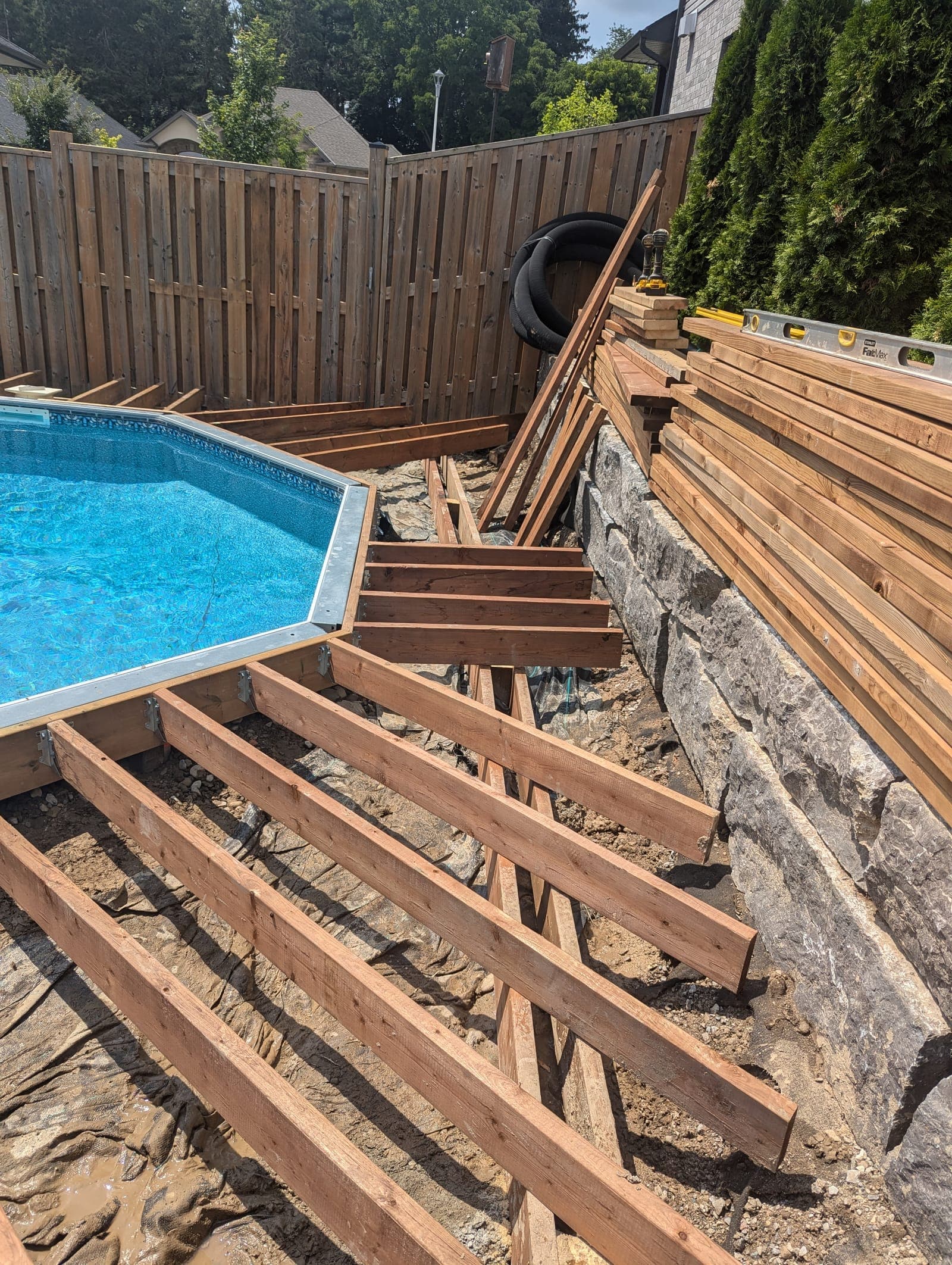
Byron and the river valley streets near Springbank see taller walls, sometimes over the 1 metre permit threshold, where a full basement walkout or a pool deck needs serious grade support. These jobs usually call for geogrid-reinforced block or engineered poured concrete.
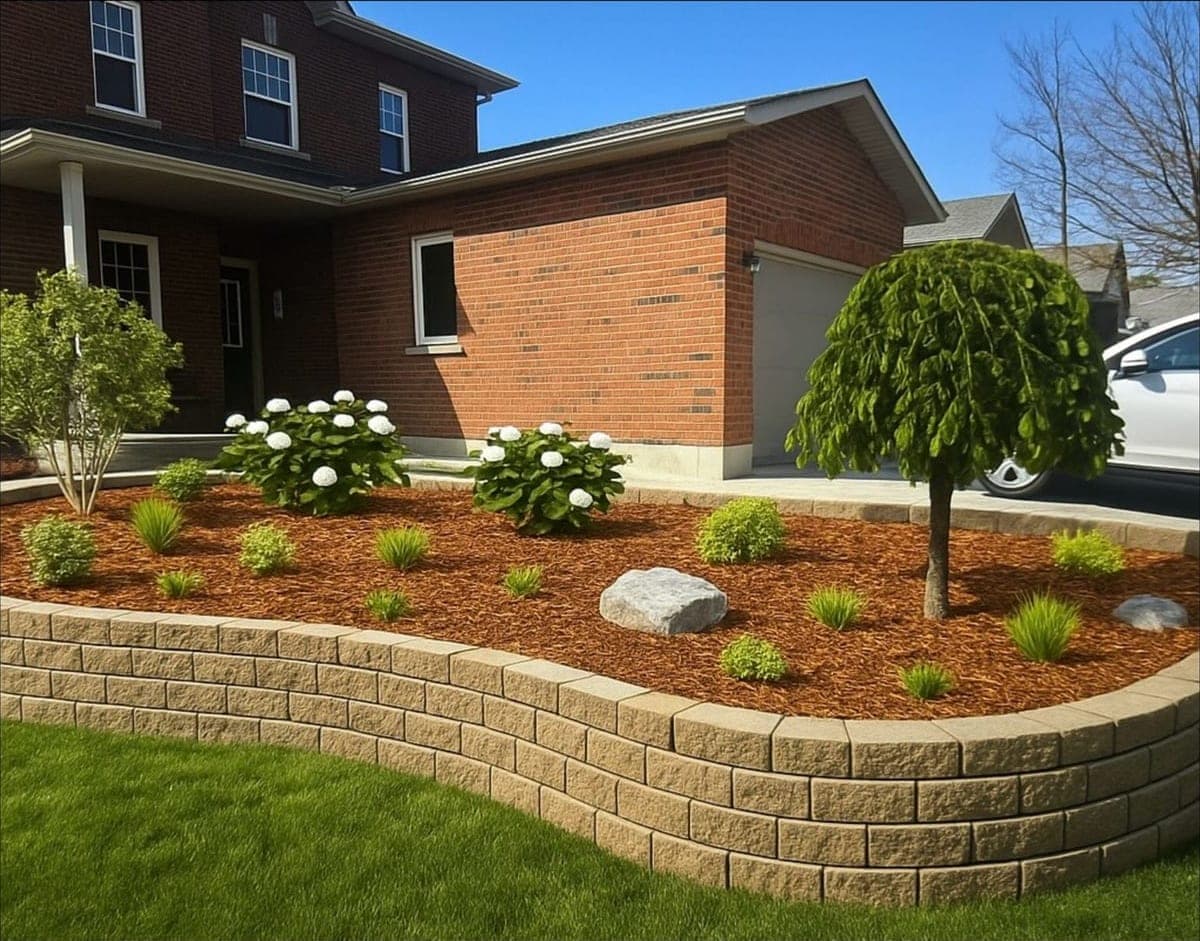
- Interlocking block for terraces, garden beds and most driveway walls under 4 feet
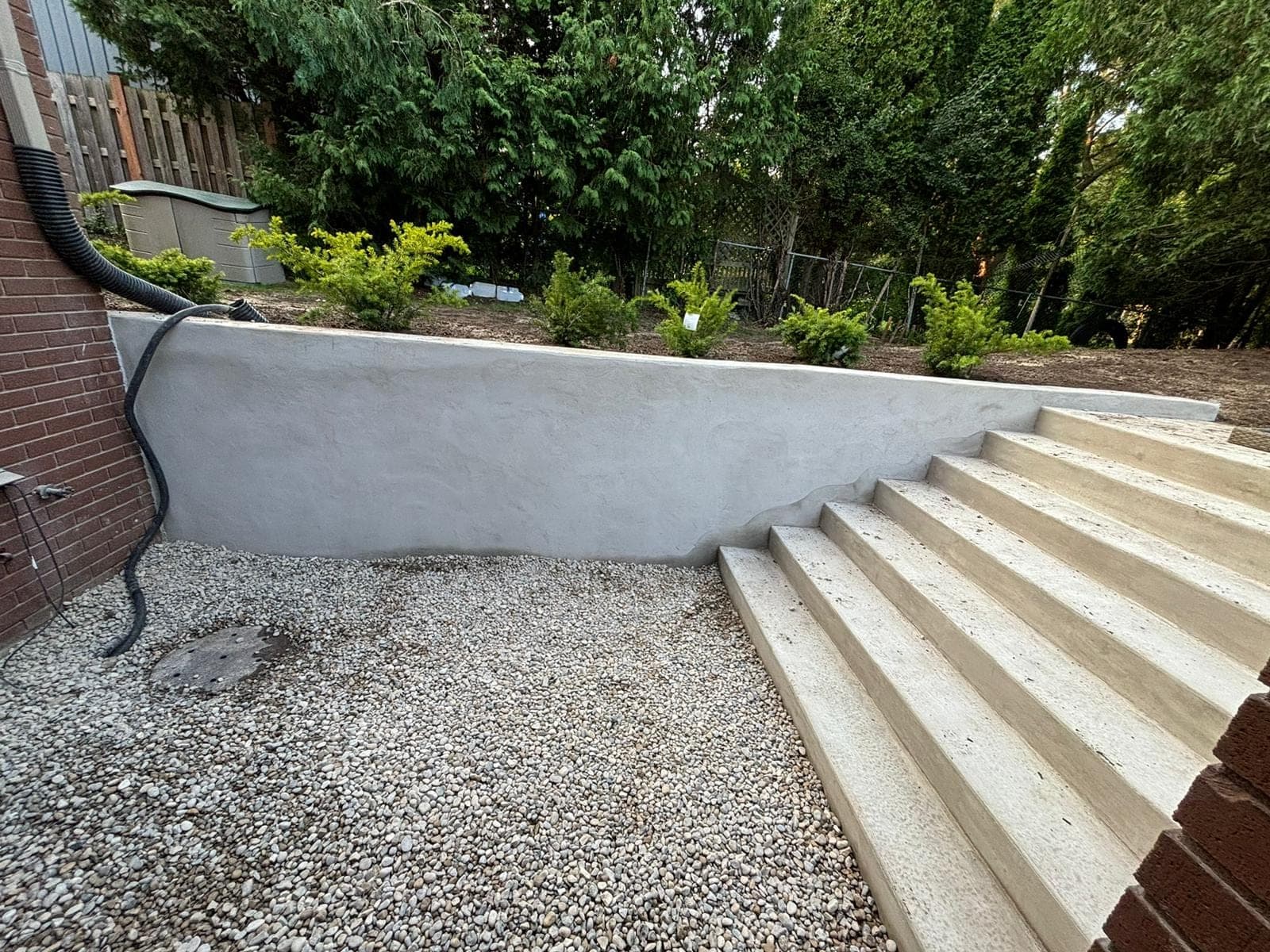
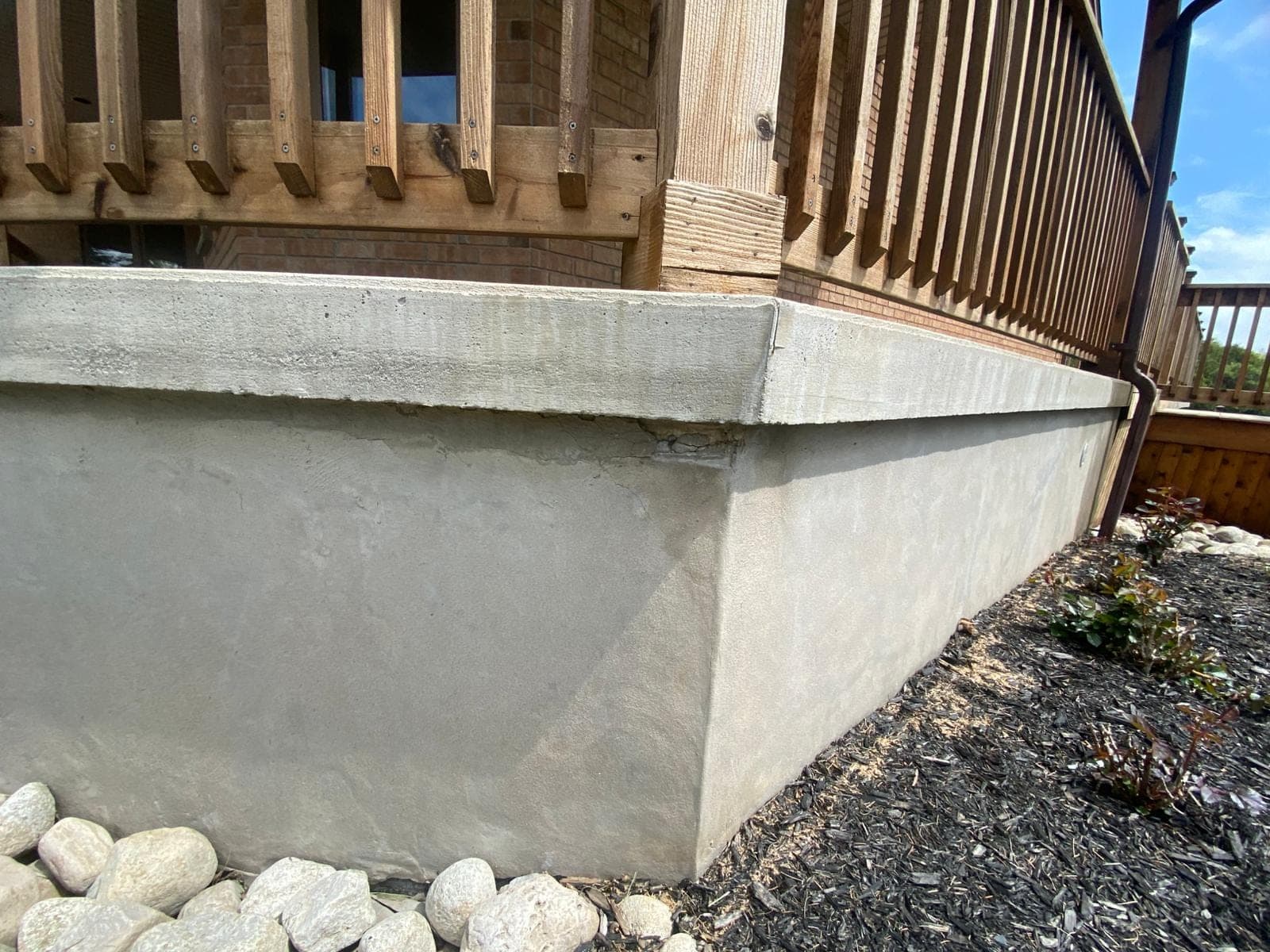
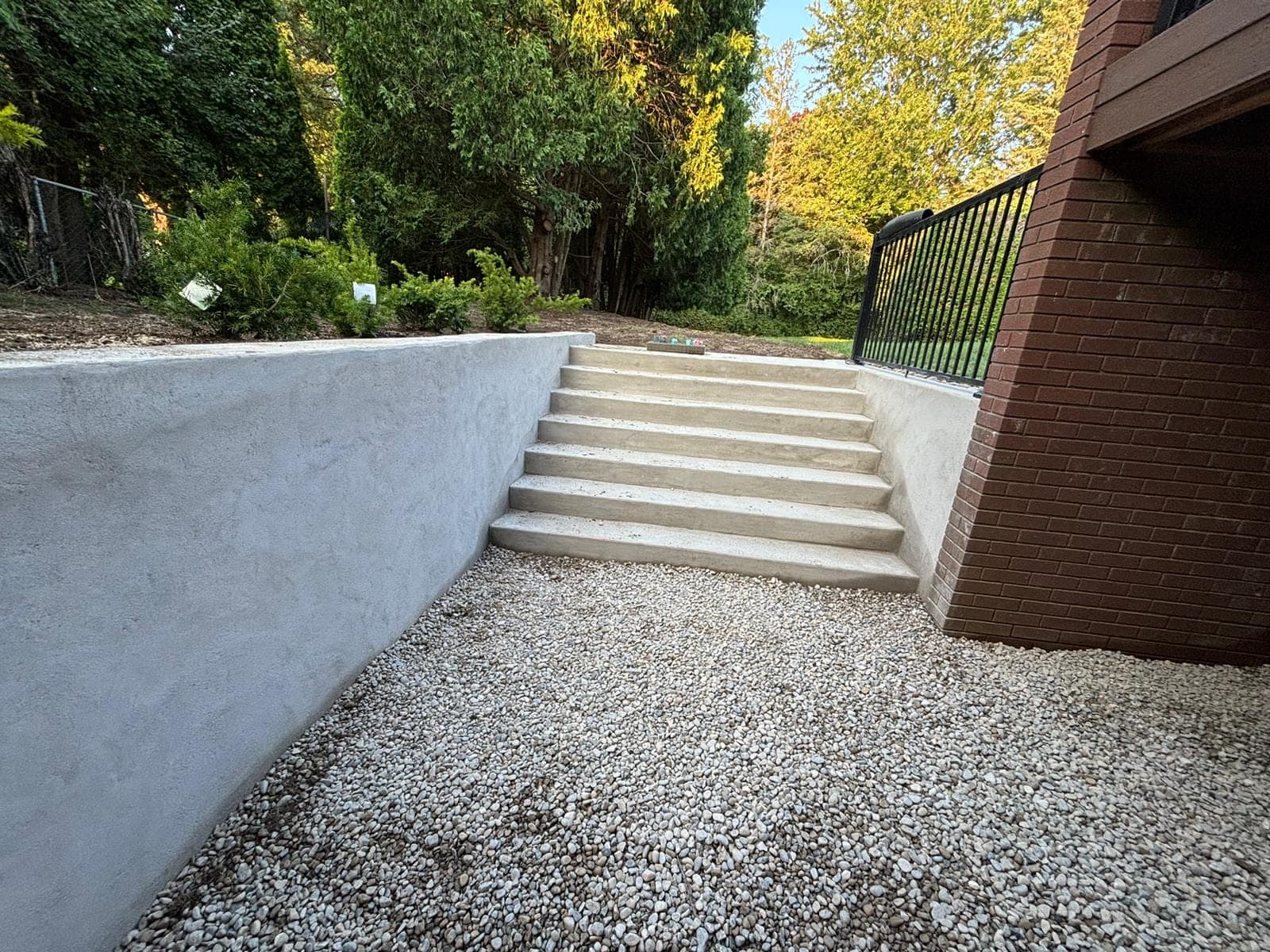
- Poured concrete for tall walls, walkouts and anywhere a clean vertical face matters
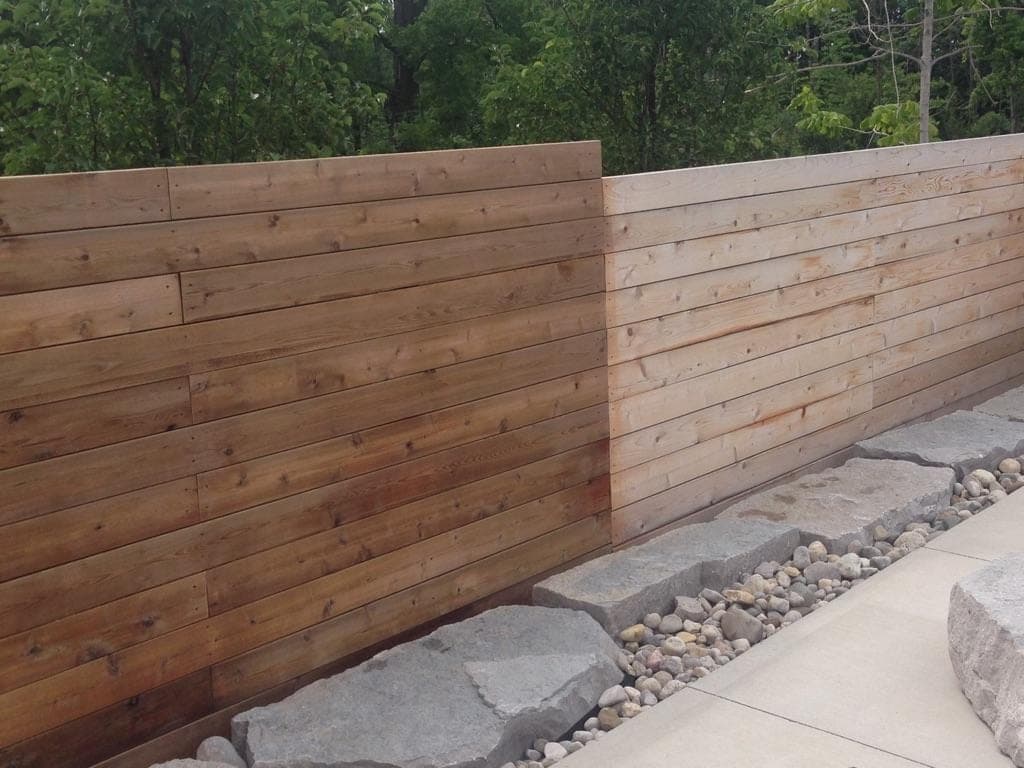
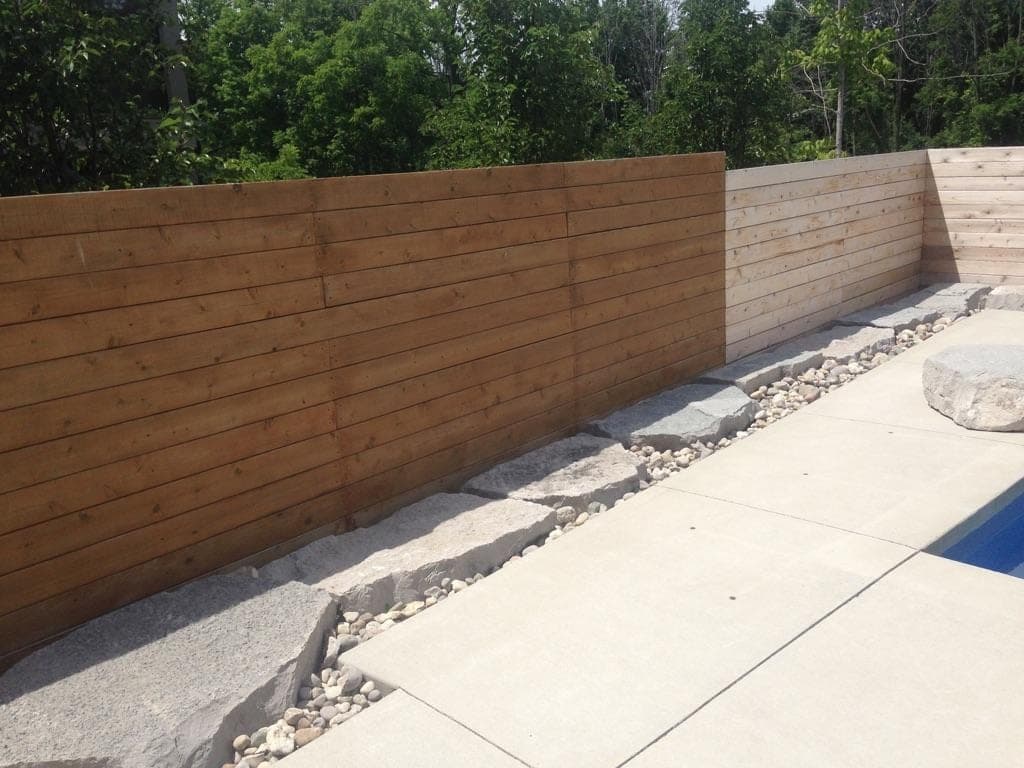
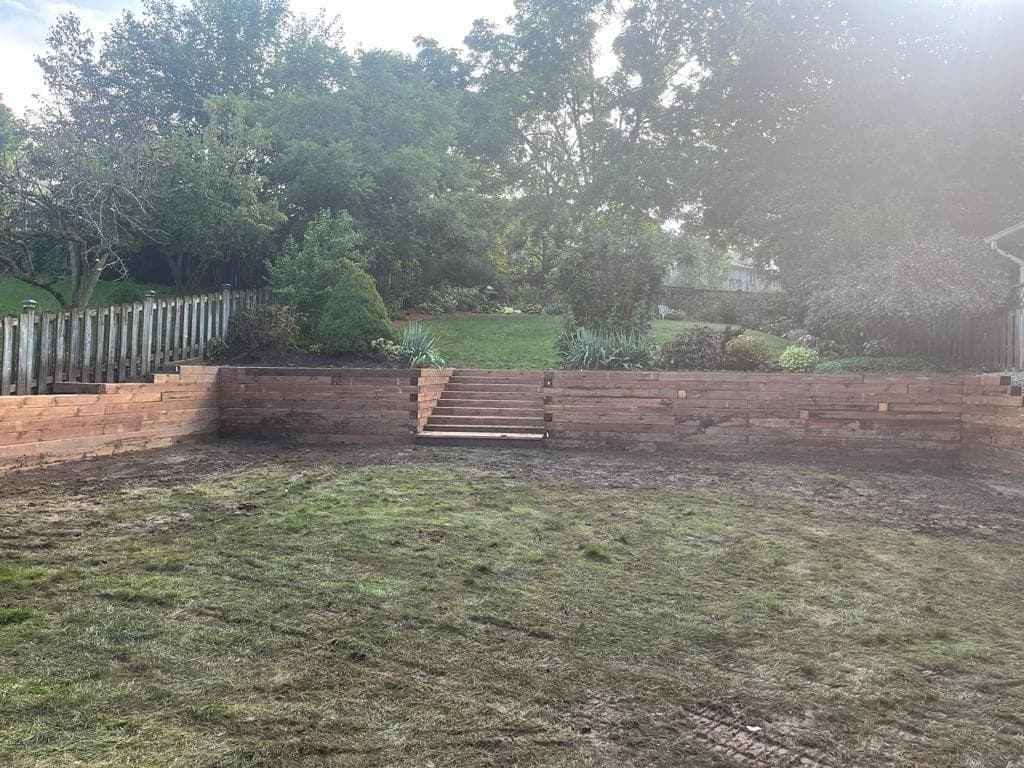
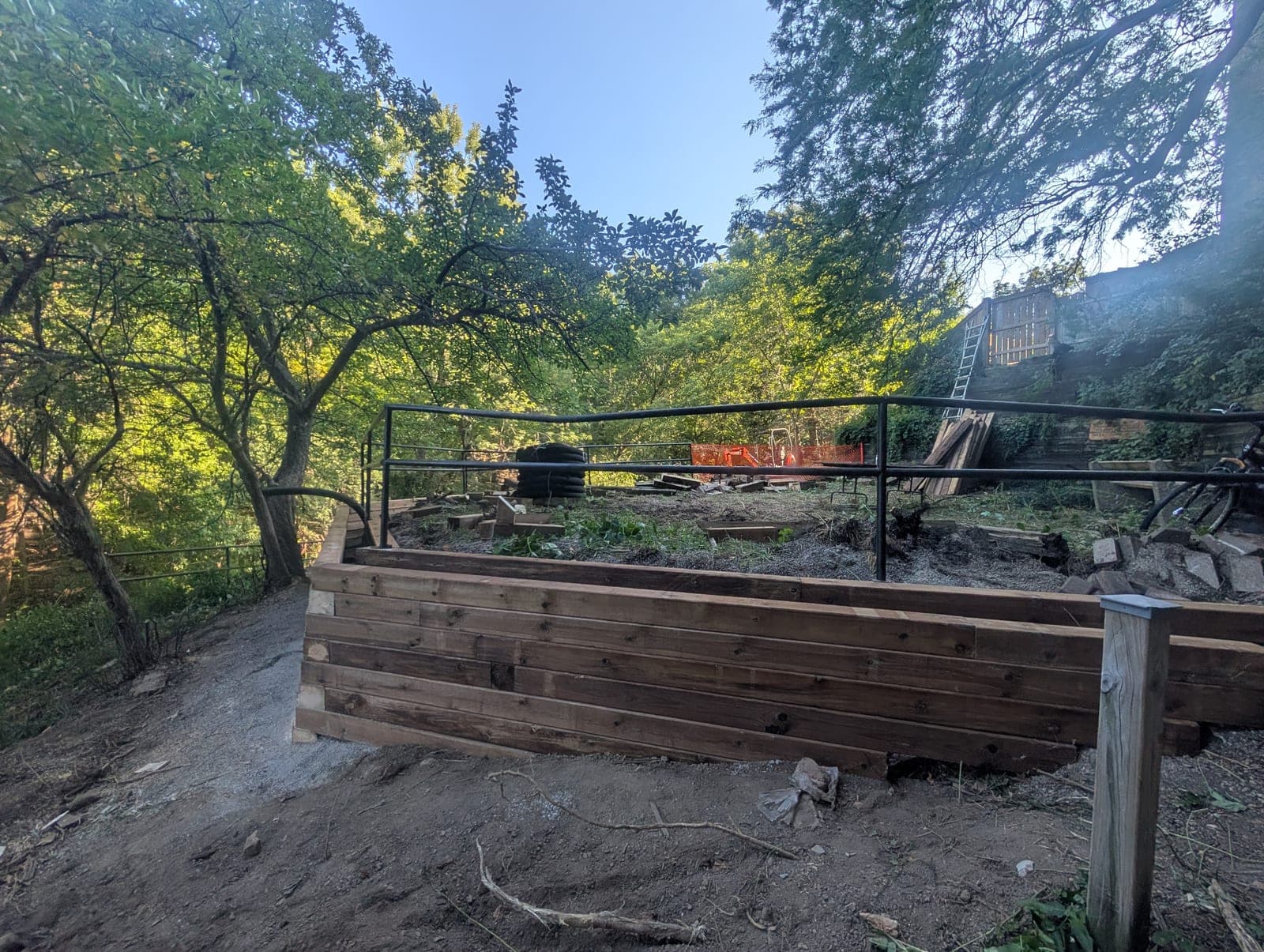
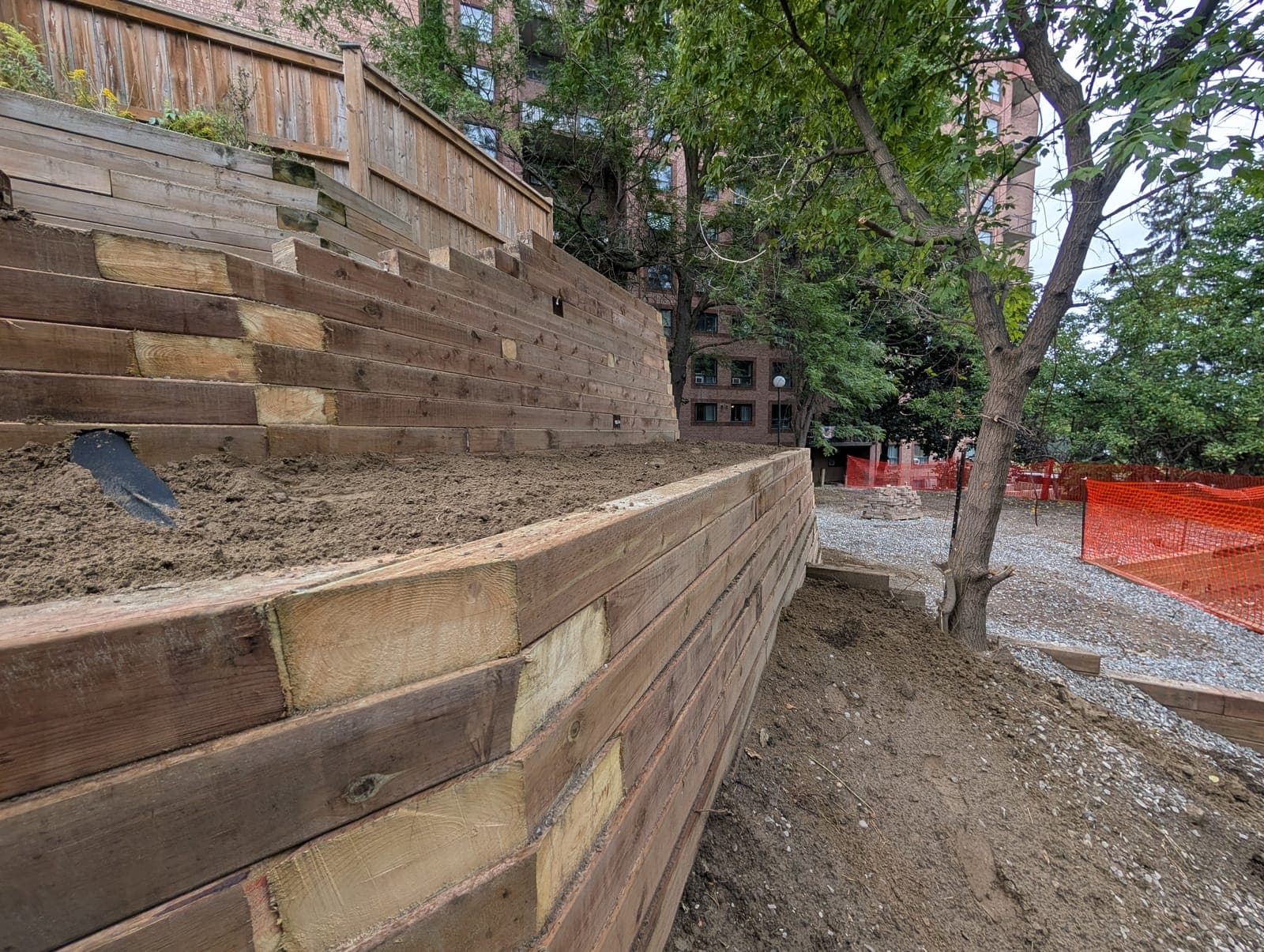
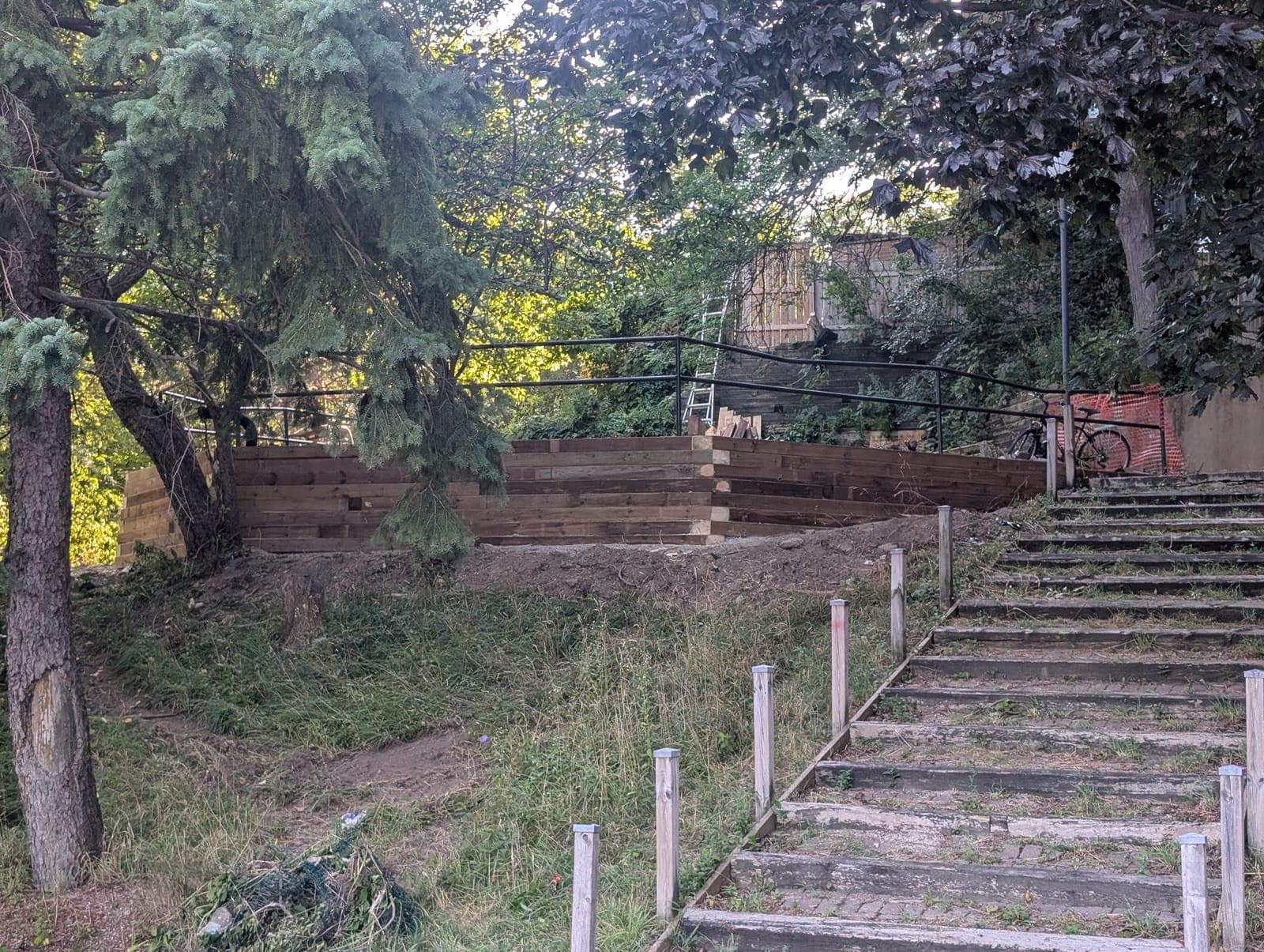
- Timber walls for budget-conscious backyard projects on stable ground
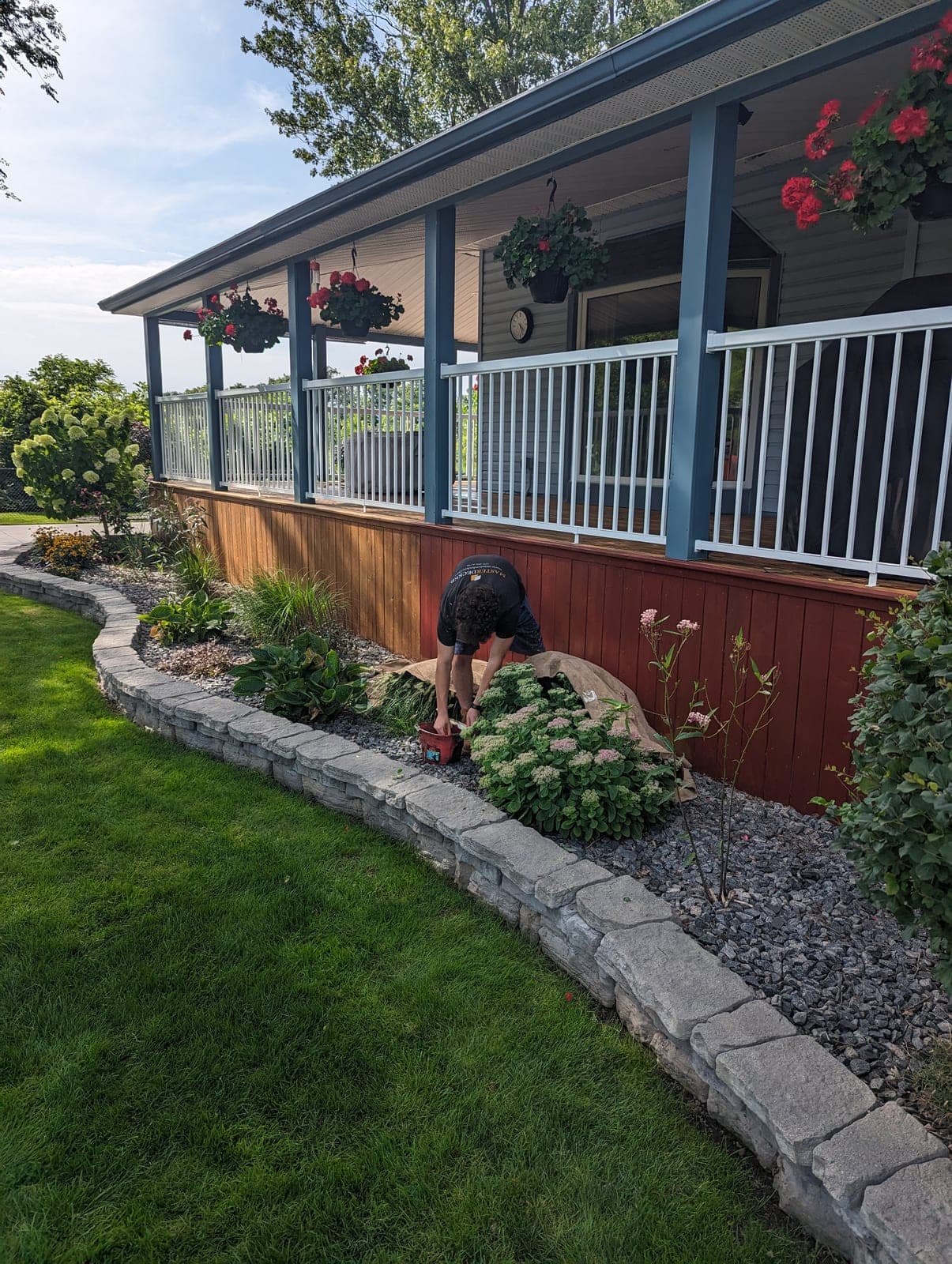
- Natural stone or armour stone where the goal is a natural look on a larger property
How We Build a Wall in London
Site visit and assessment
Kyle walks the property, checks drainage, grade and soil, and measures the wall run.
Design and written quote
We choose a wall type suited to the lot and provide a detailed written price, usually within 24 hours.
Excavation and base
We dig below frost depth and compact a granular base for the footing.
Drainage installation
Perforated weeping tile, drainage stone and filter fabric go in behind the wall before a single block is set.
Wall construction
Block, concrete or timber is installed with proper batter and, on taller sections, geogrid tied back into the slope.
Backfill and finish grade
Backfill is compacted in lifts and the site is graded to shed water away from the wall.
Permits and the City of London
The City of London requires a building permit for retaining walls over roughly 1 metre in height, and taller walls often need an engineer's drawings before permit issuance. We handle the permit application and coordinate with an engineer when the project calls for one, so you are not stuck decoding building code language yourself.
What It Costs in London
Segmental block walls in London typically run about $200 to $350 per linear foot installed, depending on wall height, the block product chosen and how much excavation the site needs. Timber is usually the lower-cost option for a straightforward backyard wall on stable ground. Poured concrete is custom quoted project by project and is generally the highest cost per foot, but it is often the right call for tall walls or walkouts. Repairs and assessments are always free, with no obligation to book the work.
Read our retaining wall cost guide ontario for full 2026 pricing ranges, or how to choose retaining wall material if you are still deciding between block, concrete and timber.
How Long a London Wall Project Takes
A typical London backyard block wall, from the site visit to the final grade, usually runs about a week start to finish once a permit is in hand. The site visit and written quote happen first, within a day or two of your call and 24 hours of the walk-through. Permit review with the City of London can take one to three weeks depending on whether engineering is required, and this is usually the longest step in the whole process, not the construction itself.
Actual construction, once permitted, is often three to five days for a standard block wall: a day for excavation and base, a day for drainage and geogrid where needed, a day or two for the wall itself, and a final day for backfill and grading. We avoid excavating London clay during the deepest winter freeze, since frozen ground and proper compaction do not mix, so late fall and winter quotes usually schedule construction for the following thaw.
Why London Homeowners Call Us
We are local, so we know which streets have wet backyards, which neighbourhoods have older walls due for a rebuild, and how London's inspectors like to see drainage documented on a permit application. Kyle reviews every estimate personally and walks every site before a number goes on paper.
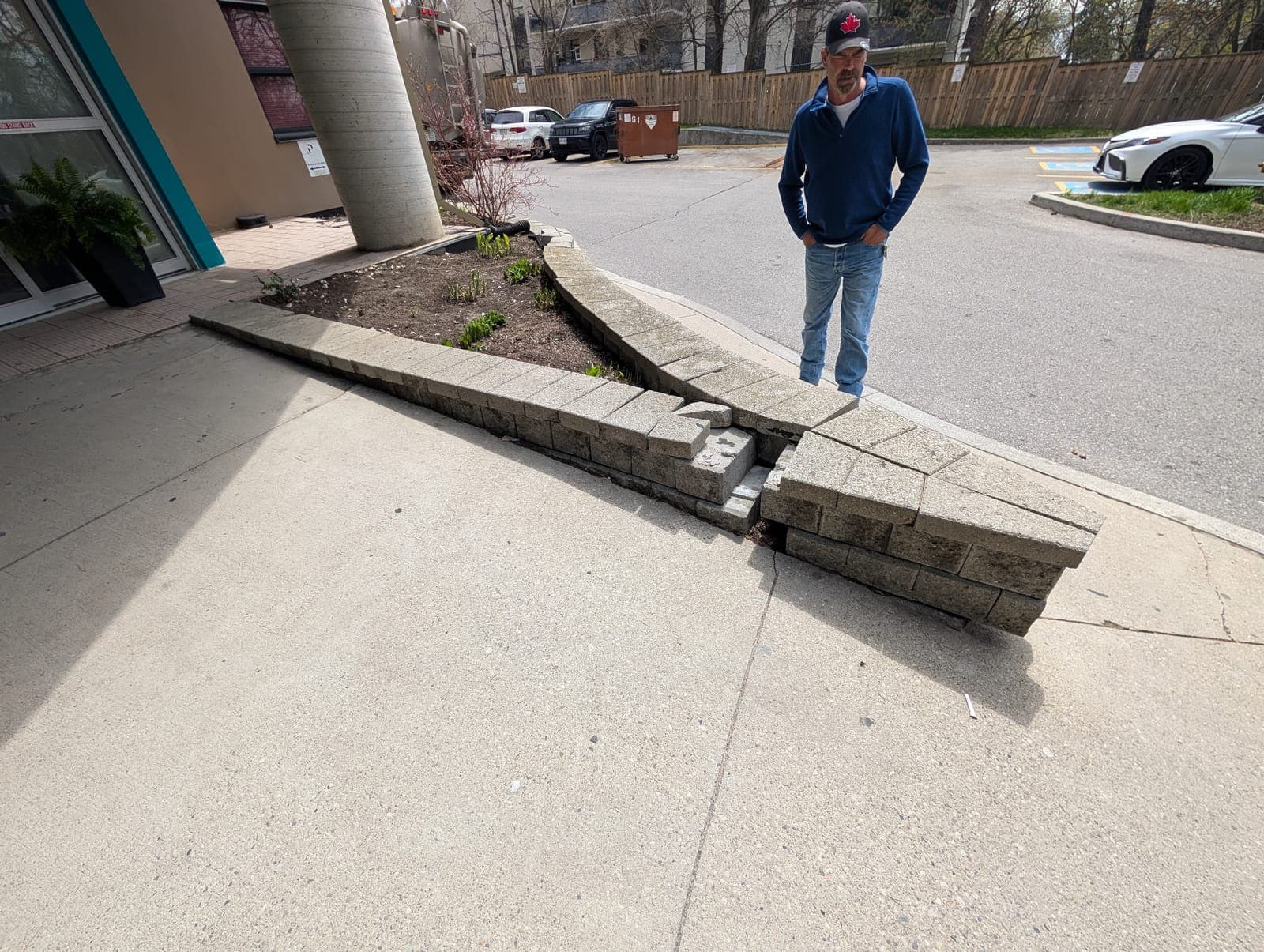
If your existing wall is bulging, leaning or shedding blocks, our retaining wall repair page covers what we look for and how a rebuild differs from a patch job.
Questions from London homeowners
Do you build retaining walls in every London neighbourhood?
Yes. We work across the city, from river valley lots in Byron and Oakridge to older graded yards in Old North and newer subdivisions near Masonville and Pond Mills. Being based in London means we can usually get to a site within a day or two of your call.
Do I need a permit for a retaining wall in London?
Generally yes if the wall is over about 1 metre tall, and the City of London may require engineered drawings depending on the site. We handle the permit application and coordinate with an engineer when needed, so you do not have to manage that process yourself.
Why do London walls fail more often on clay soil?
Clay holds water and expands when it freezes, and a wall without drainage stone and weeping tile behind it takes the full force of that expansion. Almost every failed wall we get called to inspect in London is missing proper drainage, not just built with weak materials.
What is the most common wall type you build in London?
Interlocking segmental block, because it handles London's tight urban lots well and comes in a range of colours and finishes that suit both older and newer neighbourhoods. Taller river valley lots more often call for engineered block or poured concrete.
How fast can you get a quote to me in London?
Since our crew is based in London, most site visits happen within a few days of your call, and you will usually have a written quote within 24 hours of that visit.
Can you repair an existing wall instead of rebuilding it?
Sometimes. If the base and drainage are still sound, we can often re-set a leaning section. If the wall was built without weeping tile or a proper base, a rebuild is usually the more honest recommendation, and we will tell you which situation you are in.
Services in London