Timber for Rural and Landscape Applications
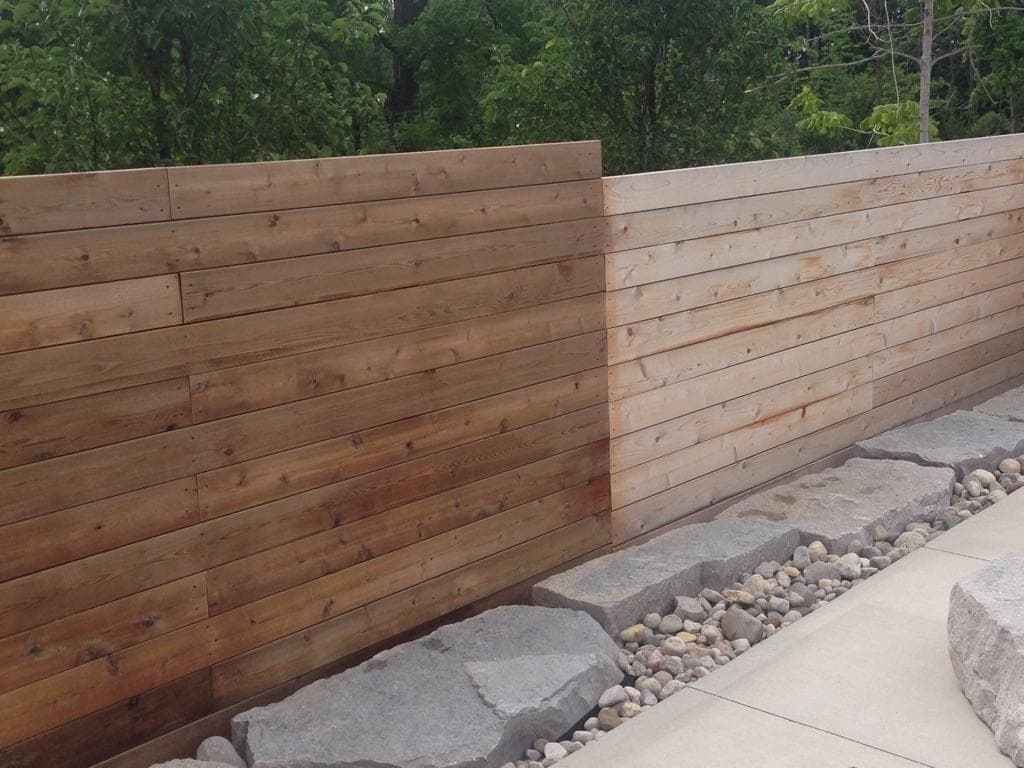
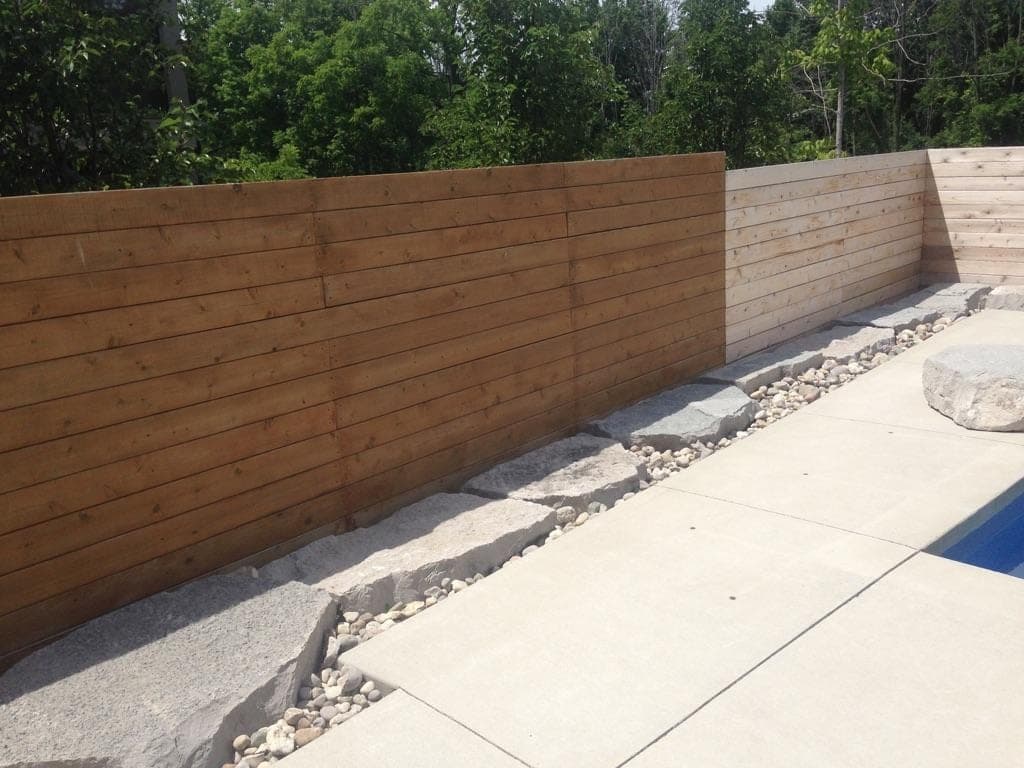
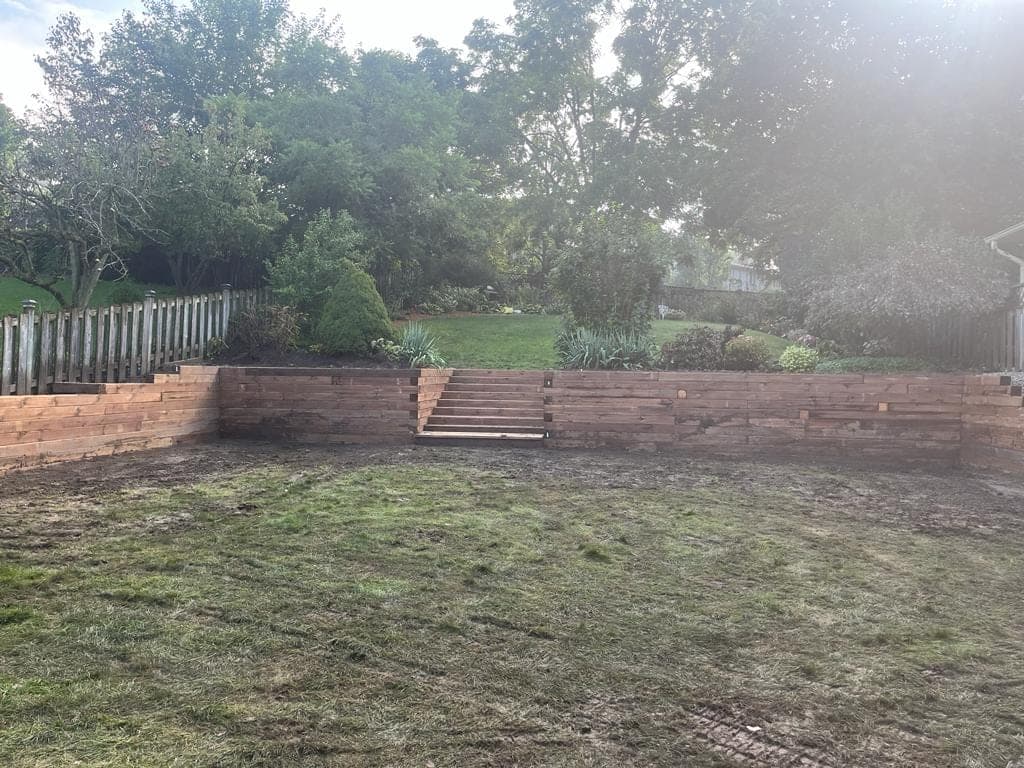
Garden terraces, raised planting beds and grade changes around farm outbuildings are common uses for timber walls in the Woodstock area. The material's natural appearance fits rural and semi-rural properties in a way that manufactured block sometimes doesn't.
It's also useful for phased projects, letting a homeowner tackle a smaller section of a larger landscape plan now and expand later.
Wood Species and Lifespan
- Pressure-treated lumber: 20 to 30 years typical service life
- Hardwood timber (oak, black locust): 30 to 50 years typical service life
Drainage Behind Every Timber Wall
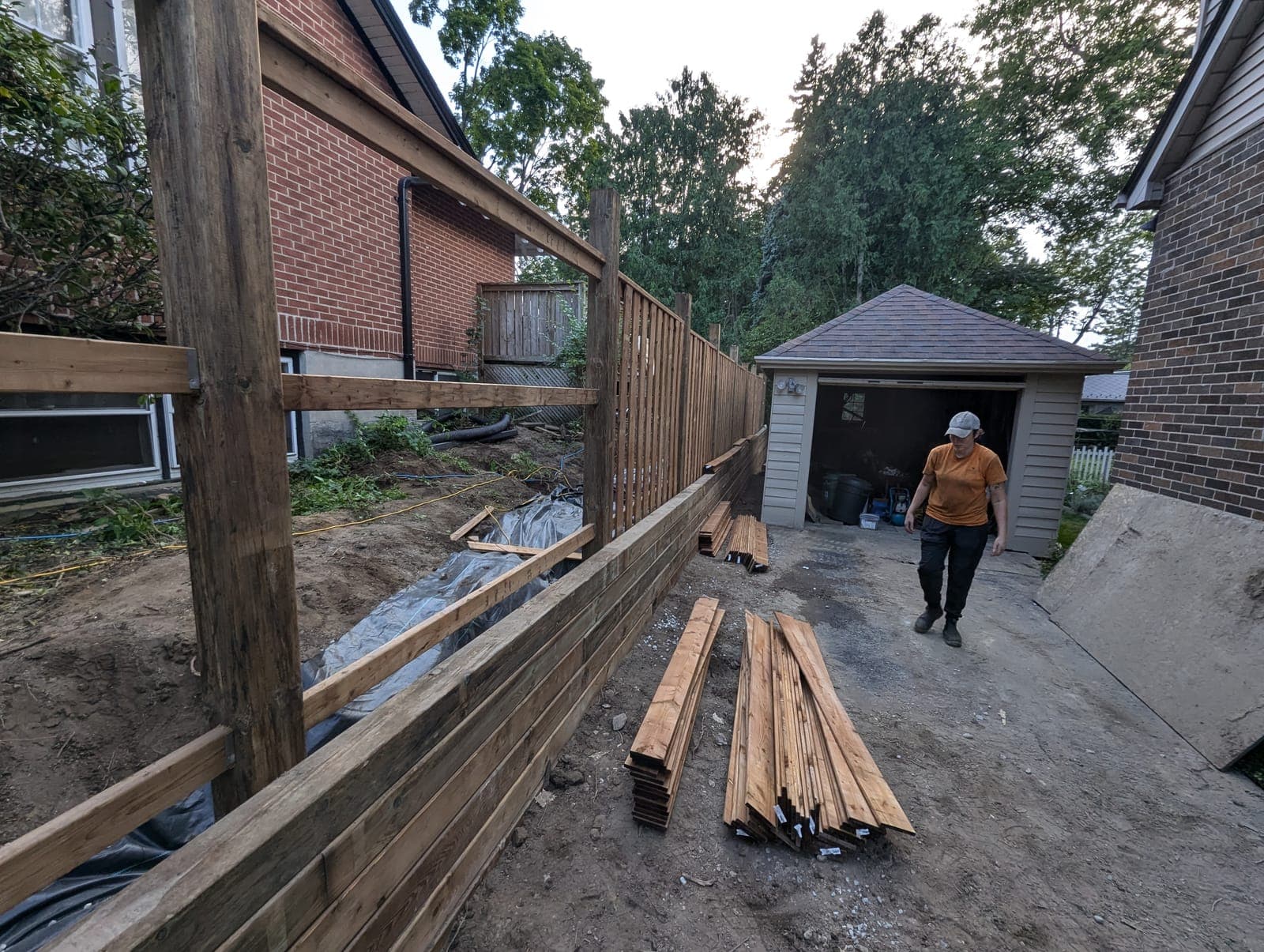
Oxford County's mixed sandy loam and clay soils drain unevenly across a single property. We assess drainage at the specific wall location rather than assuming, and install gravel backfill and drainage stone regardless of the general soil type on the lot.
Best Uses for a Woodstock Timber Wall
- Garden terraces and planting bed borders
- Grade changes up to about four feet
- Farm and acreage landscape features
- Budget-conscious projects with an acceptable lifespan tradeoff
Timber Wall Height Limits
We generally recommend timber for grade changes up to about four feet in the Woodstock area. Beyond that height, the engineering and anchoring requirements start to favour block or concrete instead.
See retaining wall height limits and engineering for where that engineering threshold sits under the Ontario Building Code.
Timber and Wildlife Considerations
On rural Woodstock-area properties, we sometimes get asked whether timber attracts pests. Properly treated lumber with good drainage is not a significant attractant, unlike untreated wood left in contact with damp soil.
Questions we get asked
Is timber suitable for a farm property near Woodstock?
Yes, it's a common choice for grade changes around outbuildings and garden areas on rural properties, offering a natural look at a lower cost than concrete.
How do I know if my soil drains well enough for a timber wall?
We check drainage at the specific wall location during the site visit rather than relying on general soil maps, since conditions vary across Oxford County properties.
Can a timber wall be extended later if my landscape plan changes?
Often yes, particularly for garden terrace walls. We can discuss extension options during the initial design if that's part of your plan.
What's the typical lifespan of a hardwood timber wall?
Oak or black locust timber walls typically last 30 to 50 years, notably longer than standard pressure-treated lumber.
Is there a maximum height for a timber retaining wall?
Practically, around four feet for most residential applications. Taller grade changes are usually better served by block or concrete.
Does a timber retaining wall attract insects or pests?
Properly treated lumber with good drainage behind it is not a significant pest attractant, unlike untreated wood in damp contact with soil.
Does a timber wall need different footings than a block or concrete wall?
Timber relies on post depth and deadman anchors rather than a continuous footing, which is a different structural approach than block or concrete. Post depth is calculated based on wall height and local soil conditions.