
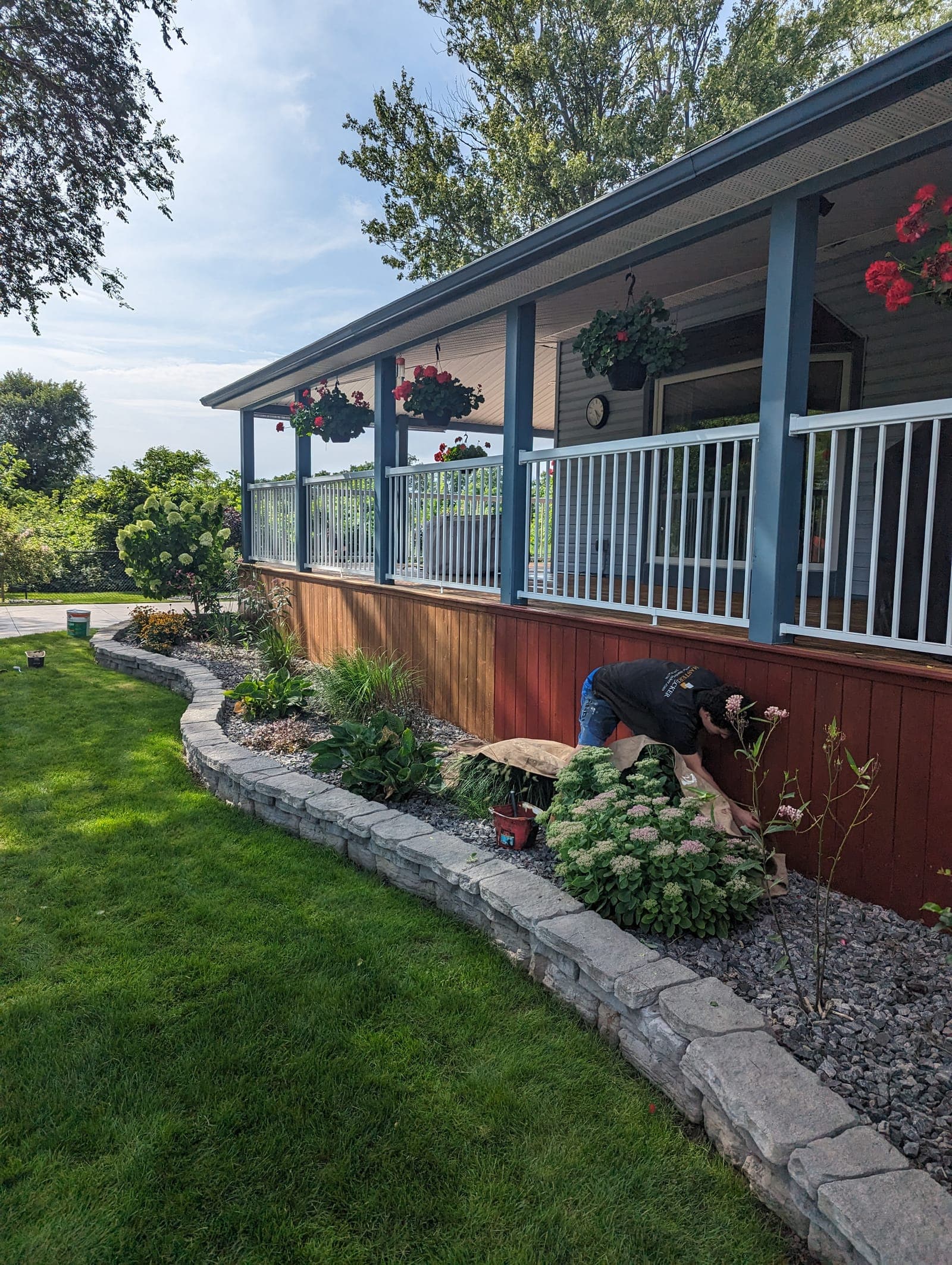
The value is mostly in what the wall makes possible
A retaining wall's biggest contribution to property value is usually indirect: it turns an unusable sloped yard into flat, functional space for a patio, a garden, or simply a level lawn. On sloped lots common in older London neighbourhoods like Byron, Oakridge and Old North, that added usable square footage is often what a buyer is actually paying for, not the wall itself.
The same logic applies to river-valley lots near the Thames and to newer subdivision grading in places like St. Thomas and Ilderton, where a builder-grade slope left untouched often reads as wasted yard. A wall that reclaims that space for a patio, a level play area or garden beds changes how the whole outdoor space functions, which is a bigger factor in buyer perception than the wall's appearance alone.
How a failing wall shows up during a sale
Home inspectors flag visible bowing, cracking, or drainage problems in a retaining wall, and it becomes a negotiation point, either a price reduction or a repair condition before closing. An unpermitted wall over the height threshold can also surface during a title search or survey, creating a compliance issue for the seller to resolve.
See signs your retaining wall is failing for what an inspector is actually looking for.
Why permit history matters to buyers and their lenders
A retaining wall built and permitted correctly gives a buyer, their lawyer, and often their lender confidence that the property does not carry a hidden compliance issue. An unpermitted wall over 1 metre can complicate closing, since some lenders and insurers want confirmation that structural work on the property met code.
See do i need a permit for a retaining wall in ontario for when a permit applies.
Material choice and how it reads to a buyer
Interlocking block in a colour that complements the home tends to read as a finished, intentional landscaping feature. A weathered, unmaintained timber wall or a visibly leaning wall of any material reads as deferred maintenance, and buyers tend to price deferred maintenance conservatively, often assuming the worst-case repair cost rather than the actual one.
What this means if you are planning to sell
Get an honest assessment now
If you have an aging or questionable wall and a sale is on the horizon, find out its real condition before a buyer's inspector does.
Address drainage issues early
A cleared drainage problem is a cheap fix, the same problem left to cause visible movement is not.
Confirm permit history
If a past wall was never permitted and should have been, resolving that ahead of a listing avoids a closing-time scramble.
Weigh repair versus rebuild
A wall past its practical repair point is sometimes better rebuilt before listing than sold as-is with a price adjustment negotiated against you.
See retaining wall repair for how we assess whether a wall is repairable.
What this means if you are buying a home with a retaining wall
Ask for the wall's age, whether it was permitted if it is over 1 metre, and whether any repairs or drainage issues have come up. A free assessment before or during a home inspection period can give you a clear, independent read on the wall's condition and remaining life, which is useful information whether you are negotiating price or just planning future maintenance budget.
Retaining walls in home insurance and future planning
Beyond a single sale, a documented, permitted wall makes future decisions easier for whoever owns the property. Insurance claims involving property damage sometimes ask about known structural features and their condition, and having a clear history, when it was built, whether it was permitted, what maintenance it has had, is useful regardless of whether you plan to sell soon or stay for decades.
This is part of why we provide detailed written quotes and can speak to a wall's construction specifics well after the project is finished, that documentation has value beyond the day the wall goes in.
Curb appeal versus structural value, and why both matter
It is worth separating two different kinds of value a wall creates. Curb appeal is what a buyer notices walking up, a clean, well-chosen material that complements the home's exterior. Structural value is what a buyer's inspector, lawyer or lender care about, and it is invisible until something goes wrong or a document confirms it is fine.
A wall can score well on one and poorly on the other, a beautiful new-looking timber wall built without proper drainage can fail an inspection just as easily as an older, plainer block wall that was built to code and has been maintained. Both kinds of value matter at resale, and neither substitutes for the other.
When a new wall is worth building purely for resale
If your yard has a slope that has never been addressed and you are within a couple of years of listing, a properly built wall can be worth the investment even if you will not enjoy the finished space for long, since it converts a lot buyers see as a liability into usable square footage. This is more clearly worthwhile on lots where the slope is the single biggest thing holding back the yard's appeal, less so on properties where other renovations would move the needle further for the same budget. A free assessment can help you weigh this against other options before committing.
Timing relative to a listing matters too, not just the wall itself. A wall completed with enough lead time for grass to establish and disturbed landscaping to recover photographs far better than one finished the week before a listing goes live, where fresh sod lines and bare soil can undercut the very impression the wall was meant to create.
Questions we get asked
Does a new retaining wall pay for itself in resale value?
It rarely returns its full cost as a direct dollar-for-dollar value, but it can be the difference between a sloped lot buyers see as a problem and one they see as usable outdoor space, which affects how the whole property is perceived.
Will a home inspector always catch a failing retaining wall?
Visible signs like bowing, cracking or clear drainage failure are commonly noted, but a wall in early-stage decline without obvious symptoms can be missed. That is one reason to get ahead of it with your own assessment.
Does an unpermitted retaining wall need to be fixed before selling?
Not always, but it can complicate closing if a buyer's lender or lawyer flags it, so resolving permit status ahead of listing is generally the smoother path.
Is it worth rebuilding an old wall before listing a house?
It depends on the wall's condition and the price point of the home. A free assessment can tell you whether a targeted repair addresses buyer concerns or whether a rebuild is the more strategic move.
Does the retaining wall material affect how buyers perceive the property?
Somewhat, a clean, well-maintained wall in any material reads as cared for. Visible neglect, regardless of material, tends to make buyers assume other deferred maintenance exists elsewhere on the property.